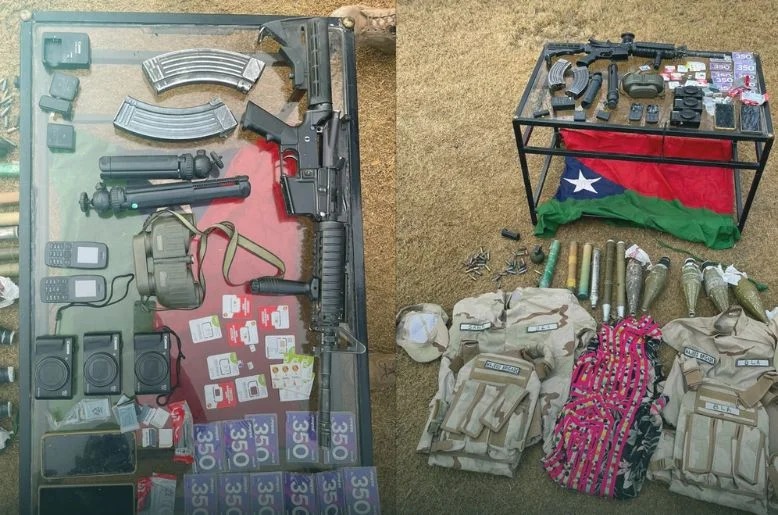
ISLAMABAD: The CNN report has confirmed Pakistan’s consistent claims that advanced US military weapons left behind after the American withdrawal from Afghanistan are now being used in terrorist attacks in Pakistan.
The CNN in its report stated that these advanced and high-tech weapons posing a serious security threat to the region.
The report said the weapons, originally supplied to strengthen the former Afghan national forces, remained in large quantities in Afghanistan following the US withdrawal. CNN said these arms now threaten not only Pakistan but also all of Afghanistan’s neighbouring countries.
According to John Sopko, former head of the US Special Inspector General for Afghanistan Reconstruction (SIGAR), around 300,000 advanced US-made weapons were present in Afghanistan at the time of the withdrawal.
CNN reported that terrorist groups’ access to these weapons has significantly increased both the intensity and sophistication of attacks. The report described the situation as particularly dangerous for China, Iran, and Pakistan.
The report said militants from the banned Tehreek-e-Taliban Pakistan (TTP) and the Balochistan Liberation Army (BLA) are using US-made assault rifles, machine guns, sniper weapons, and night-vision equipment. The weapons in use include M4 and M16 rifles, M249 machine guns, Remington sniper rifles, and advanced night-vision devices.
CNN noted that the United States officially designated the BLA as a terrorist organization in August 2025. The report added that Pakistani security forces showed CNN journalists US-marked weapons recovered from militants during counterterrorism operations.
Also Read: Havens of BLA, TTP and ISIS are in Afghanistan: DG ISPR
According to the report, militants used these advanced US weapons in multiple attacks in South Waziristan and Balochistan. Security experts told CNN that the availability of American weapons and night-vision equipment has enhanced militant capabilities and created major challenges for counterterrorism efforts, further heightening security concerns in Pakistan’s border regions.