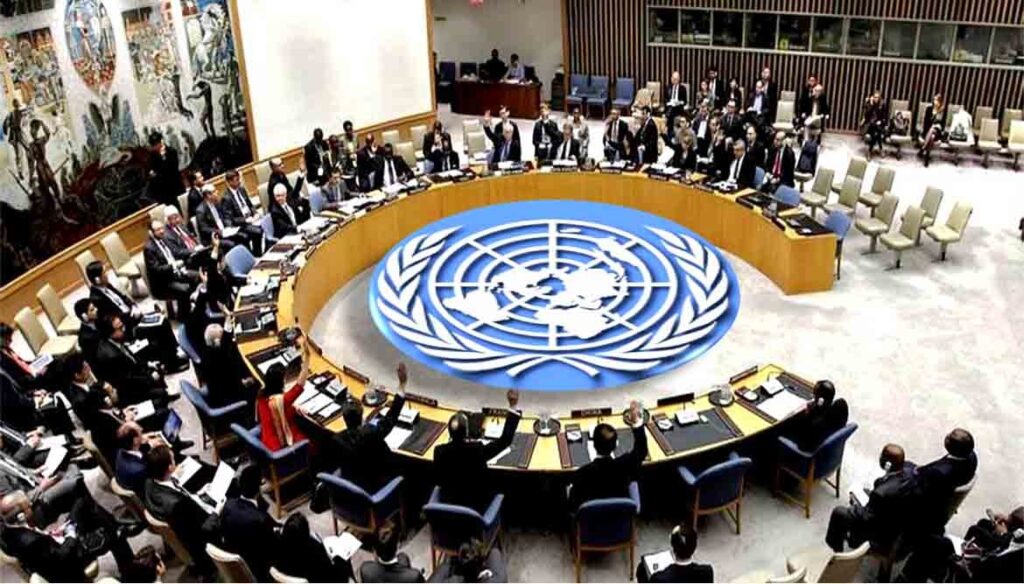
NEW YORK: The United Nations Security Council’s Analytical Support and Sanctions Monitoring Team, in its 16th report, has dismissed the Afghan Taliban’s claim that they are preventing terrorist groups from using Afghan territory to carry out cross-border terrorism, calling the assertion “not credible.”
The report warns that countries in the region are increasingly viewing Afghanistan as a source of growing regional instability.
Several member states have reported that ISIS-Khorasan, Tehrik-i-Taliban Pakistan (TTP), Al-Qaeda, the Turkistan Islamic Party, Jamaat Ansarullah, and other militant groups remain active in Afghanistan, with some involved in planning external attacks.
According to the UN, Al-Qaeda maintains close ties with the Taliban, while ISIS-Khorasan is considered the Taliban’s main adversary.
The report identifies the TTP as the most significant regional threat, stating that it continues to conduct operations from sanctuaries inside Afghanistan.
It also notes divisions within the Taliban leadership, with some senior figures viewing the TTP as harmful to relations with Pakistan, while others continue to support it.
The UN states that the TTP carried out more than 600 attacks in Pakistan in 2025, many of them complex, with most suicide bombers being Afghan nationals.
The report also acknowledges Pakistan’s progress in counterterrorism efforts, including the arrest of ISIS-Khorasan spokesperson Sultan Aziz Azzam and other key militants.
The Taliban have repeatedly denied allowing Afghan soil to be used for cross-border attacks, but multiple international reports and regional governments continue to raise concerns over militant activity originating from Afghanistan. Armed groups such as Tehrik-i-Taliban Pakistan (TTP) and ISIS-Khorasan have been planning and launching attacks in neighboring countries while operating from safe havens inside Afghan territory. These activities have heightened security tensions across the region and strained Afghanistan’s relations with its neighbors.
Despite internal disagreements within the Taliban leadership over how to deal with such groups, cross-border militancy remains a serious challenge.
Neighboring states argue that continued attacks undermine regional stability and demand concrete action to prevent Afghan territory from being used for external violence.
The issue remains a key point of contention in diplomatic engagements between the Taliban authorities and regional as well as international stakeholders.