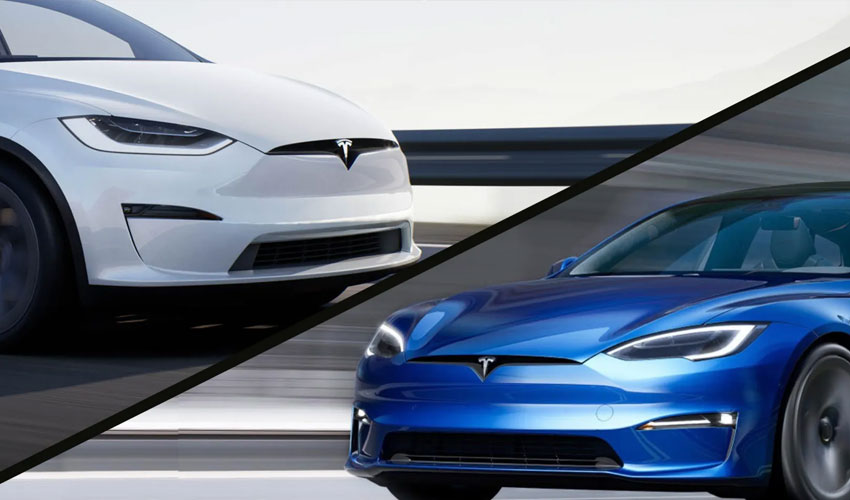
NEW YORK: Tesla will end production of its Model S sedan and Model X SUV, CEO Elon Musk said during the company’s latest quarterly earnings call.
The decision closes the chapter on two vehicles that defined Tesla’s early success in the electric vehicle market.
Musk said Tesla will build the final versions of the Model S and Model X in the next quarter. He said the company will continue supporting existing vehicles for as long as customers use them.
Musk called the move an “honorable discharge.” He said Tesla is shifting its focus toward vehicle autonomy. He urged interested buyers to place orders soon.
Factory Shift to Optimus Robots
Tesla currently builds the Model S and Model X at its Fremont, California factory. After production ends, Tesla will repurpose the space to manufacture Optimus humanoid robots.
Production of the Cybertruck will continue at Tesla’s factory near Austin, Texas, without changes.
Model S: Tesla’s First Breakthrough
Tesla launched the Model S in 2012. It was the company’s first vehicle designed from the ground up. The base price was $57,400.
The car introduced a floor-mounted battery. The design improved cabin space and handling. Tesla offered multiple battery options and charged more for longer range.
The Model S drew strong early demand. Tesla secured more than 10,000 reservations before deliveries began.
In 2013, MotorTrend named it Car of the Year. The Model S beat traditional gasoline-powered rivals. Tesla later added features such as “Ludicrous Mode,” which cut the 0–60 mph time to 2.8 seconds.
Sales slowed over time. Lower-priced Model 3 and Model Y vehicles became Tesla’s top sellers. A full redesign in 2021 failed to reverse the trend.
Model X: Ambition and Complexity
Tesla teased the Model X in 2012 and launched it in 2015. The SUV stood out for its Falcon Wing rear doors.
The doors improved access but caused production problems. Musk later called the Model X the “Fabergé of cars,” citing its luxury and manufacturing fragility.
The Model X sold well alongside the Model S but faced repeated quality and scaling issues. A major refresh in 2021 did not fix the problems.
In 2022, Musk said Tesla had erred by stopping production before the redesigned version was ready.
Market Pressures and Competition
Tesla always expected the Model 3 and Model Y to outsell the Model S and X. In recent years, sales of the flagship models flattened despite updates.
Competition increased. Traditional automakers and newer EV companies such as Rivian and Lucid Motors gained ground in the luxury segment.
Tesla unveiled the Cybertruck in 2019. The company projected annual production of 250,000 units and a starting price of $40,000.
Delays tied to the Covid pandemic and design challenges pushed back the launch. Sales later fell short of expectations. Tesla struggled to sell more than a few thousand units per quarter.
Also Read: Musk to Venezuela: Free internet is coming
Tesla grouped the Cybertruck, Model S, and Model X under “other models” in its sales reports. The structure made it hard to assess individual performance.
Analysts said continued sales of the Model S and X helped cushion the impact of the Cybertruck’s weak reception.