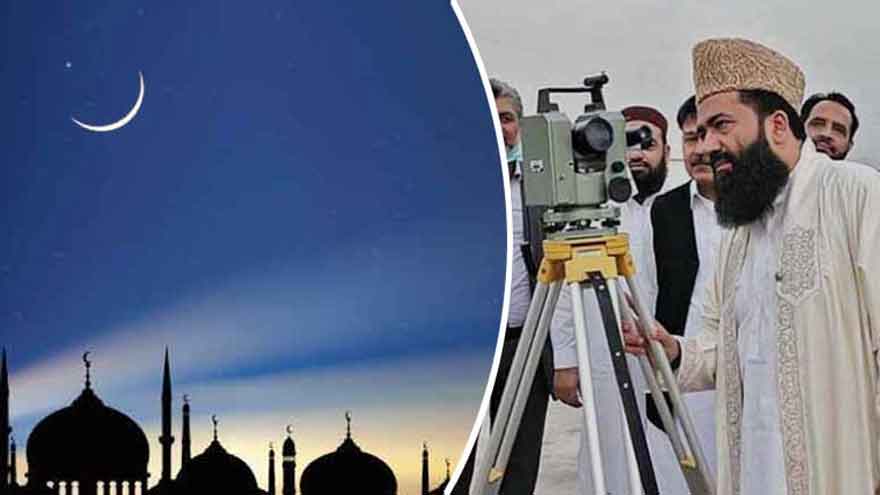
ISLAMABAD: The Space and Upper Atmosphere Research Commission (Suparco) has released its astronomical forecast regarding the moon sighting for the holy month of Rajab-ul-Murajjab 1447 Hijri.
Furthermore, the new moon of Rajab-ul-Murajjab is expected to be born on December 20, 2025, at 06:43 am (PST).
The commission stated that astronomical models and observational data were used to determine the timing of the lunar conjunction and the likelihood of moon visibility.
Furthermore, Suparco’s analysis indicates that by the time of sunset on December 21, 2025, the moon’s age will be approximately 35 hours and 26 minutes. This age is considered favorable for moon sighting, as a crescent of sufficient size and brightness is more likely to be visible under clear weather conditions.
In addition, the commission noted that in Pakistan’s coastal regions, the time gap between sunset and moonset on December 21 is expected to be around 63 minutes.
This duration, experts say, provides adequate opportunity for observers to sight the moon with the naked eye. Meanwhile, Suparco has assessed that the chances of observing the moon on the evening of December 21 are strong.
As a result, the first day of Rajab-ul-Murajjab 1447 Hijri is likely to fall on December 22, 2025, if the moon is sighted as expected. However, Suparco focused on that its forecast is based solely on scientific and astronomical calculations.
The commission clarified that the official and final announcement regarding the beginning of Rajab-ul-Murajjab will be made by the Central Ruet-e-Hilal Committee.
The committee will base its decision on verified moon sighting testimonies received from various parts of the country. Rajab-ul-Murajjab is one of the sacred months in the Islamic calendar and holds special religious importance for Muslims.
The confirmation of its beginning is closely followed across the country, as it marks the approach of important religious observances in the months ahead.