
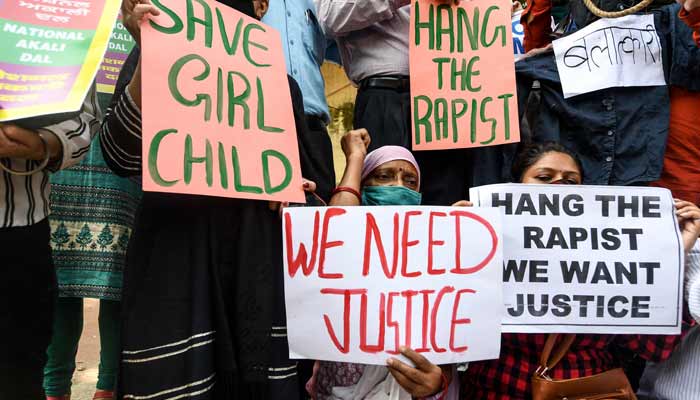
NEW DELHI: Sexual Assault Cases in India have renewed public debate over women’s safety and raised questions about whether tougher laws and expanded legal provisions introduced after the 2012 Delhi gang-rape case have been sufficient to reduce sexual violence.
Hundreds of students marched through New Delhi on Wednesday, carrying placards and chanting slogans calling for stronger measures to improve women’s safety. The demonstrations followed the alleged gang rape of a 17-year-old girl in a public park in central Delhi on Monday. Authorities said three men allegedly posing as police officers were involved in the incident.
Sexual Assault Cases in India Raise Questions Over Law Enforcement
The latest case has revived memories of the 2012 gang rape and murder of a 23-year-old physiotherapy student on a Delhi bus. The incident triggered nationwide protests and prompted major changes to India’s laws governing sexual offences.
The legal reforms expanded the definitions of certain sexual offences and introduced tougher punishments for rape. Gang rape was made punishable by a minimum prison term of 20 years, while the death penalty was introduced for repeat rape offenders.
However, women’s rights campaigners argue that stronger laws alone have not been enough. Activist Yogita Bhayana said that changing social attitudes toward women remains a major challenge, pointing to persistent victim-blaming and restrictions placed on women’s freedom.
According to the latest available official data cited in the report, India recorded an average of about 80 rape cases per day in 2024, compared with around 68 cases per day in 2012.
Activists maintain that the actual scale of sexual violence could be higher because many incidents are not reported, with victims often facing social stigma and other barriers to filing complaints.
Sexual Assault Cases in India Highlight Enforcement Challenges
Several recent cases in Delhi have further intensified concerns. They include the alleged rape and murder of a 16-year-old girl, whose body was later found in a decomposed condition, and the alleged rape of a 17-year-old girl by a bus driver and conductor who had offered her a lift during heavy rain.
Another case in Bihar, where a video emerged showing the alleged sexual assault of a teenage girl, has also drawn public attention.
Each case has resulted in arrests, political reactions and public concern. Campaigners and legal experts, however, say that effective implementation of existing laws remains a significant challenge.
Criminal lawyer Shilpi Jain told AFP that overburdened police forces and courts face difficulties in thoroughly investigating and processing cases. She said delays in the judicial process can undermine the impact of legal reforms.
Also Read: India detains pigeon on suspicion of spying across LoC
Official data cited in the report shows that India’s rape conviction rate has remained around one-quarter of cases reaching trial since 2012. The justice system also faces a substantial backlog, with fewer than 10% of more than 200,000 rape cases before courts in 2024 reportedly completed that year.
Gender rights activist Poonam Muttreja said prevention requires action beyond legislation, including efforts in homes, schools, communities, digital spaces and police institutions.
The continuing debate highlights the gap between legal reforms and their implementation, as campaigners call for stronger prevention, faster justice and broader changes in social attitudes toward sexual violence.