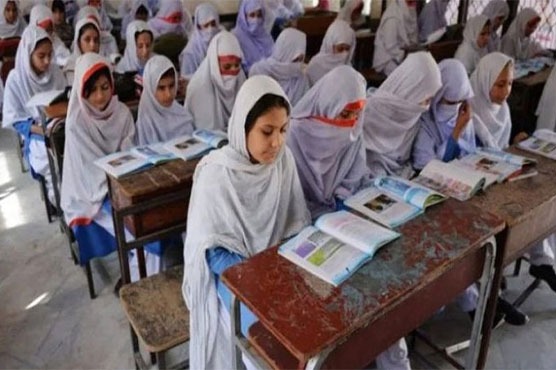
Quetta: The Balochistan Education Department has decided to revise the curriculum for the upcoming academic year.
From grade one to grade twelve, the Qurean recitation along with its translation will be officially included as a compulsory part of the syllabus.
New computer education textbooks will also be introduced for students of grades six to eight.
In addition, separate textbooks focusing on the positive and responsible use of social media have been prepared for students from grade six to grade twelve to promote digital awareness and responsible online behavior.
Balochistan has a wide network of public and private schools operating in both urban and rural areas.
The education system follows the national curriculum guidelines set in coordination with Ministry of Federal Education and Professional Training.
Government schools mainly provide free education, including textbooks in many areas, while private schools offer modern learning facilities with English-medium instruction.
Quran education holds a central place in the school system of Pakistan. Islamic Studies is a compulsory subject from primary to secondary levels, and students are taught the recitation, basic teachings, and moral values of the Holy Quran.
Under the guidance of the Ministry of Federal Education and Professional Training, Quran education has been further strengthened through curriculum reforms, including the introduction of Nazra (recitation) and translation at different grade levels.
These steps aim to help students understand the Quran not only through proper recitation but also through its meaning, promoting ethical values, discipline, and religious awareness in society.
In recent years, efforts have been made to improve the quality of education through curriculum updates, teacher training, and the inclusion of subjects like computer education, Islamic studies, and digital awareness.
However, challenges such as lack of infrastructure, teacher shortages, and low enrollment in remote regions still remain major concerns.