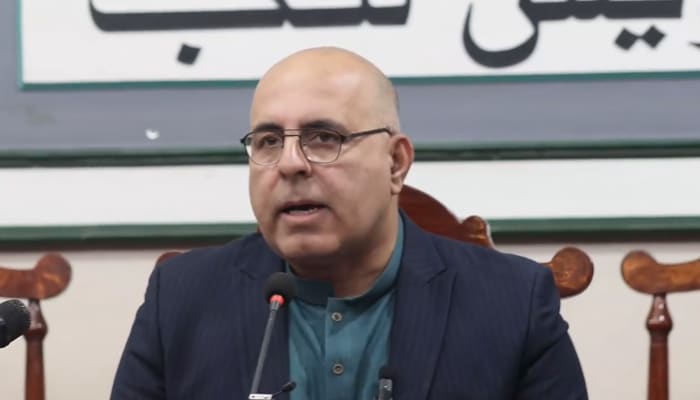
QUETTA: In a significant upgrade to the city’s public transport network, Balochistan’s Transport Secretary Hayat Khan Kakar announced on Tuesday the imminent inauguration of the ‘People’s Train Service’ in Quetta alongside the rollout of new Green and Pink Buses.
The new train service is slated to operate between the Sariab and Kuchlak areas, aimed at providing substantial relief to daily commuters and improving the overall urban transport system. This railway initiative marks a major infrastructure development for the provincial capital.
Simultaneously, the provincial government has received 21 new buses. This fleet includes five ‘Pink Buses,’ a dedicated women-only service introduced to offer safer and more convenient travel. Secretary Kakar explained that the Pink Bus Service was launched because men and women were previously traveling together on the existing Green Buses. The women’s service will run from Bileli to the University of Balochistan via Sariab.
To ensure the initiative’s comfort and security, a female conductor will be deployed on each Pink Bus to collect fares, with active efforts to recruit female drivers as well. The government expects over 10,000 daily passengers across both bus services, whose routes have already been officially notified. Plans are also in place to expand the Pink Bus network based on passenger demand.
Looking beyond Quetta, Secretary Kakar announced that the Green and Pink Bus model will be replicated in other major districts including Turbat, Gwadar, Khuzdar, Dera Bugti, and Sui. Bus stops for these services will feature separate seating points for men and women, further refining the public transport experience across Balochistan.
Meanwhile Aslam Baloch, the Balochistan Provincial President and Chairman of the Quetta National Party, has launched a fierce critique against the government’s recent notification granting Justice of Peace powers to administrative officers, labeling it a dangerous conspiracy to undermine the judiciary and suppress political dissent.
In a strong statement, Baloch asserted that the move represents a dual-pronged attack. Firstly, he described it as “a conspiracy to interfere in the judicial system and limit the powers of the judiciary,” effectively undermining it at a foundational level. Secondly, he accused the government of weaponizing this tactic to target political opposition. “This tactic is being used to harass political workers and suppress their voices by punishing them in the name of Justice of Peace,” he claimed.