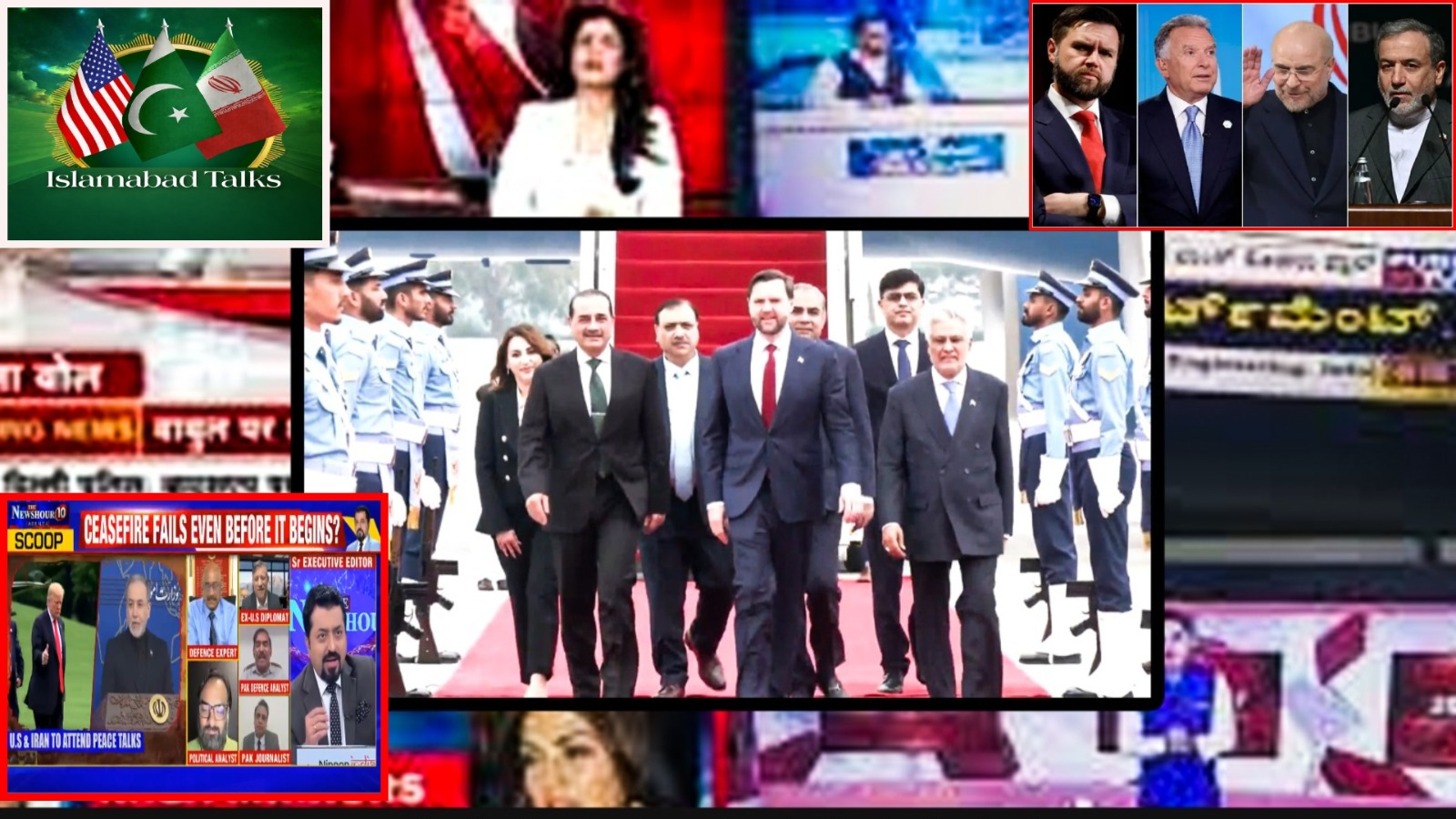
ISLAMABAD: Pakistan’s diplomatic efforts have been credited with bringing the United States and Iran to the negotiating table in Islamabad, in a development seen as unlikely until recently.
Tensions between the two sides had escalated sharply, raising fears of a wider regional conflict. Concerns had also been expressed about the possibility of a broader global crisis.
Pakistan played a key role in facilitating a ceasefire between the two countries, officials said. The move helped ease tensions and opened the door for dialogue.
Global attention has since shifted to Islamabad, where the talks are being held. International media coverage has highlighted Pakistan’s diplomatic engagement and arrangements for the negotiations.
Senior representatives from both sides have arrived in the capital, including US Vice President JD Vance and Iranian officials led by Parliament Speaker Mohammad Bagher Ghalibaf and Foreign Minister Abbas Araghchi.
The development has drawn varied reactions in the region. Media narratives in neighbouring India have been critical of Pakistan’s role, with some reports questioning the success of its diplomatic efforts.
Claims had also circulated suggesting that the Iranian delegation would not attend the talks and that the US delegation might delay its visit. Those claims were not borne out as both delegations arrived in Islamabad.
In recent days, televised debates in India have featured sharp exchanges between anchors and international commentators over Pakistan’s role.
In one such exchange, former US diplomat Jeffrey Gunther rejected concerns over security in Pakistan. He said the US vice president was fully secure and described the issue as being unnecessarily politicised.
He said the focus should remain on human lives, economic stability, and energy security rather than political narratives. He also cautioned against turning the issue into a regional media dispute.
Pakistan’s diplomatic role has been acknowledged in parts of the international community, where the ceasefire has been viewed as a step towards de-escalation.
Officials said Pakistan had engaged in diplomatic efforts since the early stages of the crisis, while regional positions varied during the conflict.
Analysts said the talks in Islamabad represent a significant moment in efforts to stabilise the situation and reduce tensions in the region.
Pakistan has positioned itself as a facilitator of dialogue, with the outcome of the negotiations expected to have broader implications for regional and global stability.