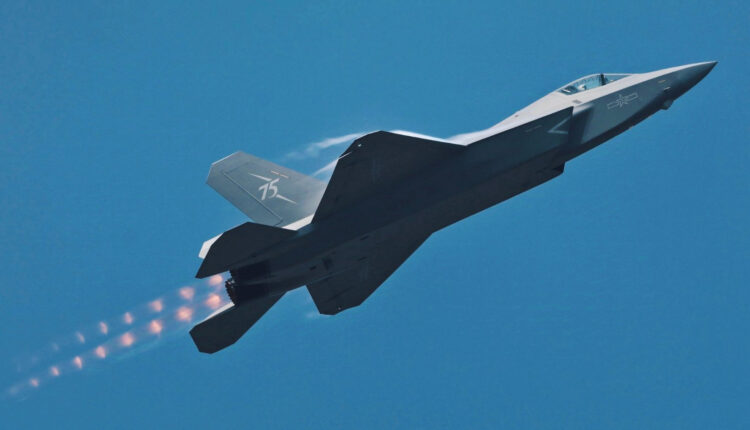
ISLAMABAD: Former Pakistan Air Force Vice Chief Air Marshal (retd) Arshad Malik said the PAF has decided to induct next-generation J-35 stealth fighter jets to strengthen national air defence.
Speaking on WE News programme Sahafat aur Siyasat, Malik said the aircraft could enter service within the next two to three years.
He said Pakistan may initially acquire between 20 and 32 jets.
Malik said the induction would significantly enhance Pakistan’s combat capability and alter the regional balance of power.
He described the J-35 as a strong strategic signal.
He said the stealth fighters offer deep-penetration capability, low observability, advanced radar systems and long-range missiles.
“These features allow them to evade enemy air defences,” he said.
Malik said the PAF has consistently balanced defensive posture with offensive capability.
He said modern warfare is no longer limited to air and land domains.
Cyber, space, economic and psychological fronts have become integral to conflict, he added.
Malik said the PAF has adopted a multi-domain operations doctrine to meet these challenges.
He said the strategy integrates cyber force, space capabilities, electronic warfare and network-centric operations into a unified system.
Commenting on the domestic security situation, Malik said the recent rise in terrorist attacks was alarming.
He said the killing of civilians was a national tragedy.
He added that the violence was not driven solely by internal factors.
External involvement was also present, he said.
Malik said shifting regional geopolitics had further complicated Pakistan’s security environment.
He said adversaries now prefer proxy warfare, cyber operations and psychological pressure over conventional conflict.
He said the PAF had reorganized its defence posture in response and carried out long-term planning for future wars.
Malik said that after 2019, the PAF conducted a detailed assessment of its vulnerabilities.
He said the force prioritized indigenization to secure long-term strategic autonomy.
“A country cannot remain sovereign if it lacks control over its critical defence systems,” he said.
He said the PAF focused heavily on domestic development of software, radar systems, electronic warfare and missile integration.
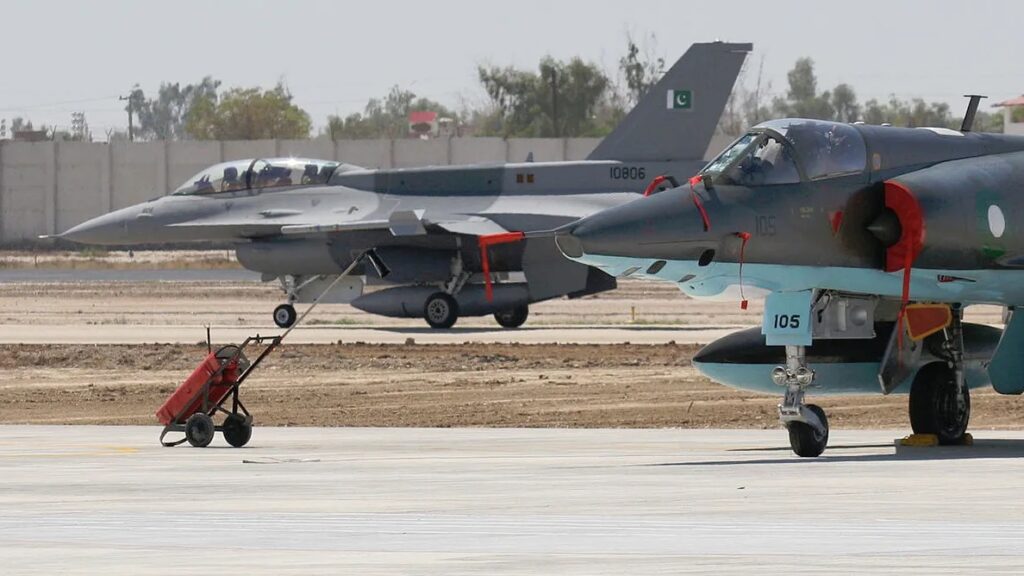
Malik said the JF-17 Thunder is now a fully combat-proven platform.
He said the Block-III variant features an AESA radar, beyond-visual-range missiles, electronic countermeasures and advanced network integration.
He said the aircraft offers cost-effective performance and suits developing countries.
Malik rejected the perception that PAF successes rely on direct foreign assistance.
He said equipment may come from multiple countries, but operational effectiveness depends on local expertise.
He said integration, planning and execution reflect the professionalism of PAF leadership.
“Modern weapons alone do not make a force strong,” he said.
“Strategy, training and decision-making matter more.”
Malik said the PAF would continue to strengthen its preparedness.
He said the force remained fully ready to respond to any hostile action, defensively and offensively.
Also Read: Armed Forces Stand United, Fully Prepared for Any Threat: PAF Chief
He said the PAF’s progress demonstrated how vision, consistency and trust in indigenous capability could build a strong and sovereign defence system.