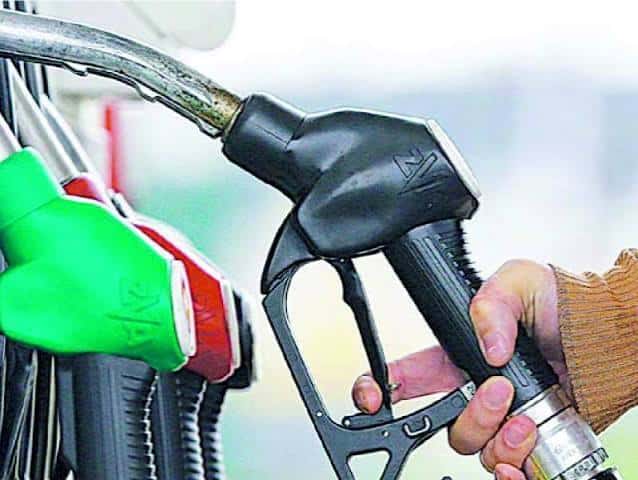
ISLAMABAD: The federal government decided to keep the prices of petrol and high-speed diesel (HSD) unchanged, citing the non-publication of Platts prices on August 10.
The petrol will continue to be sold at Rs327.62 per litre, while the price of high-speed diesel will remain at Rs380.86 per litre. The revised prices will remain applicable from August 11.
The government is currently charging Rs114 per litre in taxes and duties on petrol, while HSD carries Rs100 per litre in taxes and duties.
The decision comes amid continued volatility in international oil markets and uncertainty surrounding global energy supplies.
The government has recently introduced changes to the mechanism for determining petroleum prices in response to fluctuations in international crude prices.
The price of HSD has declined considerably from its peak of Rs520.35 per litre recorded on April 3. The price had risen from around Rs281 per litre after the outbreak of the US-Iran conflict on February 28.
Petrol prices also witnessed a sharp increase during the same period, reaching a peak of Rs458.41 per litre on April 3 after beginning an upward trend from around Rs266 per litre in the first week of March.
In this regard, Petroleum Minister Ali Pervaiz Malik had announced that petroleum prices would be determined on a daily basis in view of renewed tensions in the Persian Gulf and fluctuations in international oil markets.
The Oil and Gas Regulatory Authority (Ogra) was assigned the responsibility of determining fuel prices on a daily basis in line with international market trends.
The decision marked a shift from the weekly price revision mechanism that had been followed since early March.
The government had also introduced fuel conservation measures amid concerns over possible disruptions to global oil supplies due to the ongoing conflict in the Middle East.
The federal government announced targeted relief measures aimed at providing subsidised fuel to certain segments.
However, the decision to introduce daily fuel price revisions has faced opposition from the All Pakistan Dealers Association, which has indicated that it may consider a protest plan against the new mechanism.
Petroleum prices remain particularly important for consumers and businesses across Pakistan.
The petrol is widely used by private vehicles, motorcycles, rickshaws and small transport vehicles, meaning price fluctuations directly affect household budgets, particularly among middle- and lower-middle-income groups.
Petrol and HSD are also among the government’s major sources of petroleum-related revenue, with combined monthly sales estimated at around 700,000 to 800,000 tonnes, while kerosene demand remains significantly lower at approximately 10,000 tonnes per month.