
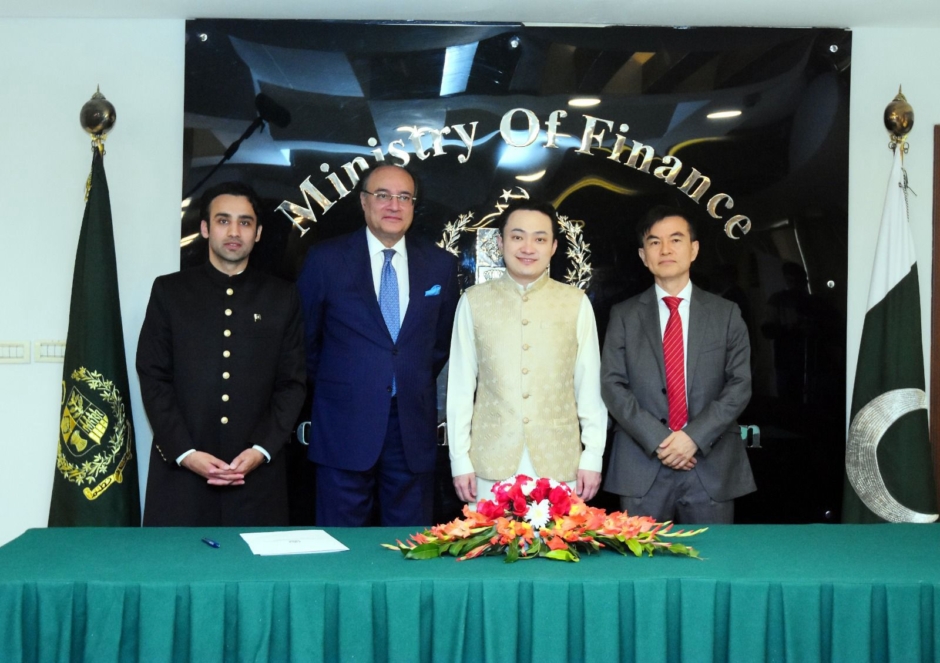
ISLAMABAD: The Chairman of the Pakistan Virtual Assets Regulatory Authority (PVARA) Bilal Bin Saqib, has clarified that the no-objection certificates (NOCs) issued to global cryptocurrency exchanges Binance and HTX do not constitute full approval, but represent an initial step under a “risk-mitigated, phased and supervised entry framework.”
In this regard, Saqib explained that the move followed Pakistan’s decision on Friday to grant preliminary clearance to the two exchanges, allowing them to register with regulators, establish local subsidiaries and begin preparations for applying for full operating licences.
Furthermore, the NOCs permit Binance and HTX to register on Pakistan’s Anti-Money Laundering (AML) system, set up local operations and initiate the formal licensing process under regulatory oversight.
Moreover, Saqib said the decision reflected a shift in regulatory thinking and was guided by a “Pakistan-first approach”.
He stressed that the supervised entry framework enables authorities to exercise control while allowing innovation to develop within defined legal boundaries. In this sense, Saqib outlined three key areas of regulatory control established through the framework.
These include safeguards against money laundering and terrorism financing, transparency regarding ownership structures and fitness and propriety checks, and a clear pathway towards licensing through the enforcement of regulatory timelines.
“It is mandatory for every platform to register on the AML system and maintain direct linkages with the Financial Monitoring Unit,”
Saqib said, adding that no digital asset platform would be permitted to operate in Pakistan without full disclosure and verification.
He further noted that licensing proceedings would only advance for entities that complied fully with Pakistani law and regulatory oversight.
In addition, Saqib focused on the fact that this phased model was consistent with international best practices, adding that leading global financial centres have adopted similar approaches when regulating emerging industries.
Saqib mentioned that Pakistan’s significant presence in the global cryptocurrency space, noting that the country ranks among the world’s top three in crypto adoption. He estimated that between 30 and 40 million Pakistanis currently use digital assets, largely in the absence of a formal regulatory framework.
“They have adopted this industry without regulation, education or institutional support,” he said. “
This indicates the world-class potential of our youth, but it also raises questions about whether our systems and regulations are equally prepared.”



