ISLAMABAD: Oil, gas prices are expected to remain elevated despite a fragile ceasefire between Iran, the United States, and Israel, experts said.
A return to pre-war levels in oil and gas prices is likely to take time, amid ongoing uncertainty in global markets.
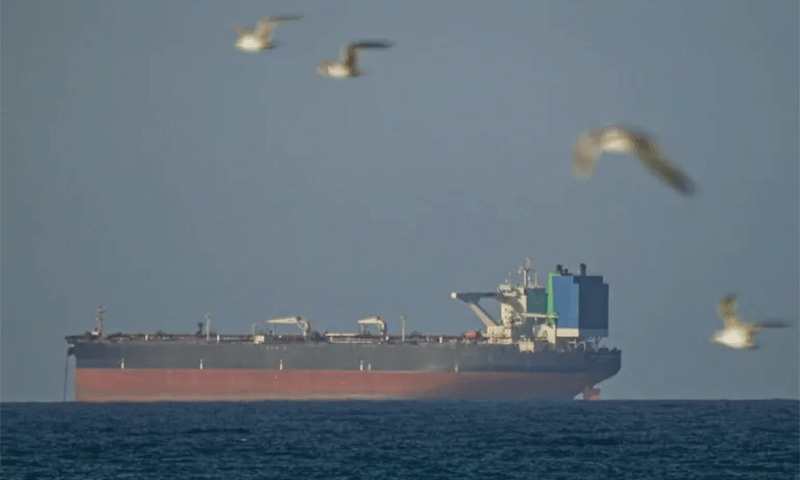
Iran had closed the Strait of Hormuz in response to US and Israeli strikes. The route, which connects the Gulf to the Gulf of Oman, handles nearly 20 percent of global oil and gas shipments.
The disruption, along with attacks on energy infrastructure in the region, led to a sharp rise in energy prices and related commodities, including helium and fertilisers. The impact has been felt across the global economy, particularly in developing countries in Asia and Africa.
Market stability depends on the full and consistent resumption of shipments through the Strait of Hormuz, experts said. The situation remains uncertain, making it difficult to predict when prices will normalise.
Data showed that before the conflict, between 120 and 140 ships passed through the route daily. In recent days, the number has dropped significantly to only a few vessels, severely affecting supply.
Concerns have also been raised over potential fees on vessels and rising insurance costs linked to Iran, which could keep prices elevated. However, experts said the primary issue remains the restoration of supply.
The International Monetary Fund (IMF) has also warned that global economic growth could slow, even if the ceasefire holds.
Experts estimate that it may take three to six months for liquefied natural gas (LNG) supplies to return to normal levels. The situation has been further complicated by production disruptions in countries such as Iraq.
Overall, continued uncertainty, geopolitical tensions, and supply disruptions indicate that energy prices are likely to remain high in the near term, with full stabilisation expected to take time.