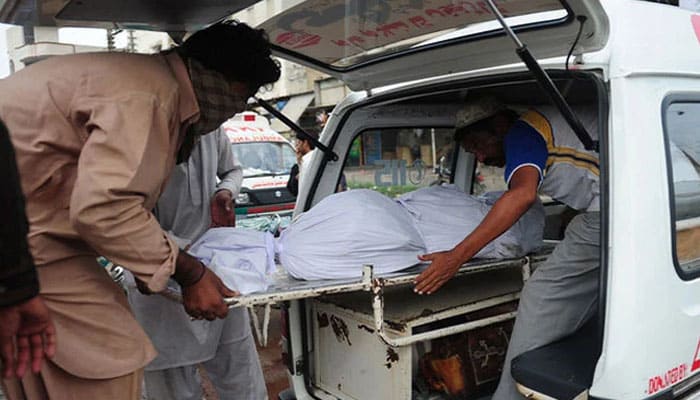
MARDAN: Armed individuals broke into a residence in the Khana Khandray area of Mardan and opened fire, killing three family members.
The victims of the fatal shooting include a man, his wife, and their daughter-in-law.
According to local police, the lethal attack stemmed from an ongoing land dispute.
Following the shooting, the perpetrators managed to flee the scene, and law enforcement teams are conducting active searches to locate and apprehend them.
Family Rivalries and Tribal Clashes in KP
The tragic shooting in Mardan underscores a deeply rooted socio-cultural challenge within Khyber Pakhtunkhwa (KP), where land disputes, family feuds, and tribal rivalries frequently escalate into deadly violence.
In many parts of the province, property ownership is not merely a financial asset but a symbol of family honor, power, and ancestral legacy.
Due to fragmented or poorly digitized land revenue records, overlapping claims on agricultural or commercial property often persist for generations.
When formal civil legal channels are perceived as slow, bureaucratic, or ineffective, families sometimes take matters into their own hands, relying on heavily armed retinues to enforce territory or avenge perceived slights.
Compounding this issue is the historical prevalence of a weaponized culture and tribal codes of conduct, such as Badal (revenge), which mandates that a grievance or murder committed against one’s kin must be answered with equal severity.
These cycles of retaliatory violence often mean that an initial disagreement over a boundary wall or inheritance can morph into a multi-generational blood feud, engulfing entire families—including women, children, and elderly relatives who traditionally were spared in older tribal codes.
Despite modern policing and the extension of formal judicial structures across KP, traditional informal arbitration councils, known as Jirgas, are still relied upon to negotiate truces.
However, if an agreement fails or feels unjust to one party, the consequences are devastatingly quick.
This continuous friction between traditional honor codes and state law enforcement leaves many rural and suburban communities vulnerable to sudden, localized outbursts of extreme violence.