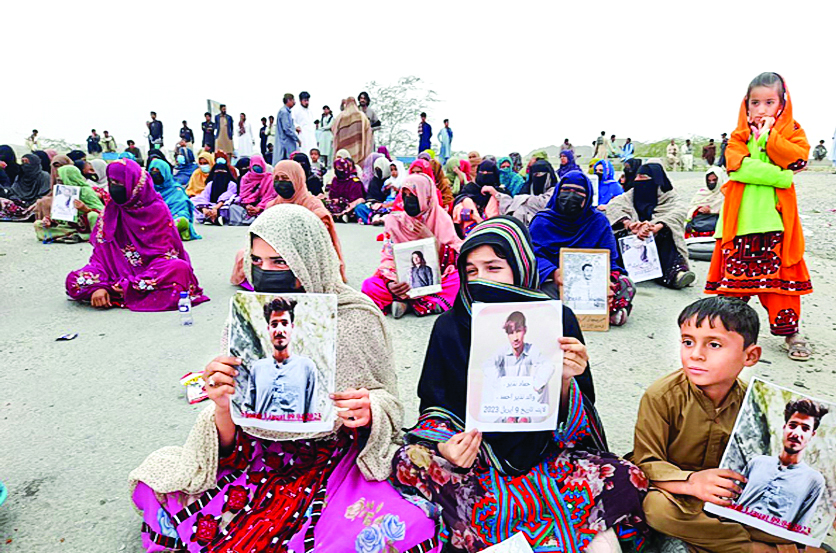
QUETTA: In a landmark decision, the Balochistan Cabinet has approved comprehensive legislation aimed at permanently addressing and legally resolving the long-standing issue of missing persons in the province.
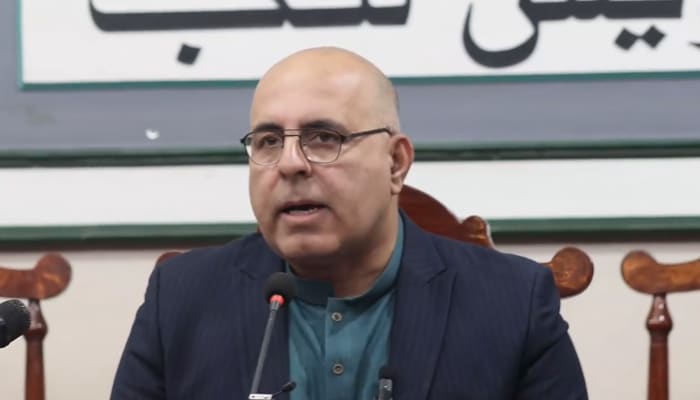
Chief Minister Mir Sarfraz Bugti, who presided over the 22nd meeting of the provincial cabinet at the Chief Minister’s Secretariat in Quetta, stated that the missing persons case has been systematically used for years as a propaganda tool against the state of Pakistan.
He accused certain elements and political parties of exploiting this sensitive matter purely for political gains without ever making any genuine effort toward a lasting and legal solution.
The Chief Minister emphasized that credit for resolving the issue on a permanent basis goes to the provincial government, the cabinet, members of the assembly, and the Chief Secretary of Balochistan, who successfully got a comprehensive and effective law passed by the Balochistan Assembly.
“We have buried this issue forever,” he declared. “From February 1 onwards, the so-called missing persons controversy will end.
A clear legal framework will exist. If any individual disappears due to involvement with terrorist organizations or goes into hiding voluntarily, the state cannot be held responsible.”
He pointed out that courts and relevant commissions already exist to investigate genuine claims of disappearance, but unfortunately in Balochistan, the narrative of enforced disappearance is quickly manufactured and used to launch immediate propaganda against the state.
To counter this trend, the cabinet has approved the Balochistan Prevention of Detention and Radicalization Act (Double One Tetra A) along with its 2025 Rules.
Under this law, designated centres will be established where suspects will be interrogated under the supervision of authorized police officers.
Counselling will also be provided to address extremism, misleading narratives, and anti-state thinking.
Key safeguards include:
- Families will be informed within 24 hours.
- Meetings with family members will be permitted.
- Medical facilities will be provided.
- No detainee will be shifted outside these centres.
- Any law enforcement agency wishing to conduct investigation must do so within these designated facilities.
Chief Minister Bugti said his government has earned the distinction of resolving an issue that had been politicized for decades.
“Those who built their politics around this matter will now see their politics buried forever.”
Among other major decisions taken during the meeting:
- Approval of the Balochistan Witness Protection (Amendment) Bill 2025.
- The Chief Minister noted that due to the absence of an effective witness protection system in the past, conviction rates in terrorism and heinous crime cases remained between 1–2%. The new reforms introduce “faceless” courts where witness identities will remain completely confidential (known only to the judge), which is expected to increase conviction rates by over 50–60%.
- Satisfaction expressed over online merit-based recruitment in the Finance Department; agreement reached to gradually implement digitized recruitment across other departments.
- Approval to abolish the Religious Affairs Department and adjust its employees in other departments.
- Creation of two new divisions: Pishin and Koh-e-Sulaiman.
- Administrative attachment of Ziarat to Loralai district.
- Establishment of Municipal Committee Karbala in Pishin district.
- Approval of policies for law officers’ evaluation, grant-in-aid amendments for minority affairs, elimination of child labour, making higher technical education a compulsory service, and verification of educational credentials of contract teachers.
The Chief Minister directed the Chief Minister Inspection Team to immediately begin verifying educational degrees of recently hired contract teachers, starting from Nasirabad and Dera Bugti districts, and to register FIRs against those holding fake degrees.
- Decision to incorporate the national curriculum into the provincial curriculum from the academic year 2026–27.
- Ad-hoc recruitment of mathematics, science, and English teachers for middle, high, and higher secondary schools under the Chief Minister Academic Excellence Programme.
- Approval of the Balochistan Protection and Promotion of Reproductive Health Rights Bill 2026, aimed at improving maternal and child health, making family planning services effective and accessible, and safeguarding fundamental human rights related to reproductive health.
- Formation of a secretaries-level committee to review the feasibility of establishing a food street from Imdad Chowk and Taxi Stand to Liaquat Square at Saleem Medical Complex.
Concluding the session, Chief Minister Mir Sarfraz Bugti described all the decisions as practical examples of good governance.
He stressed that only through effective legislation and timely implementation can public trust in the state be restored.