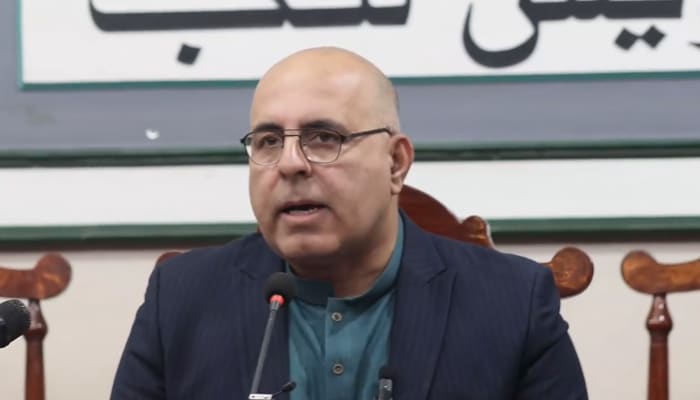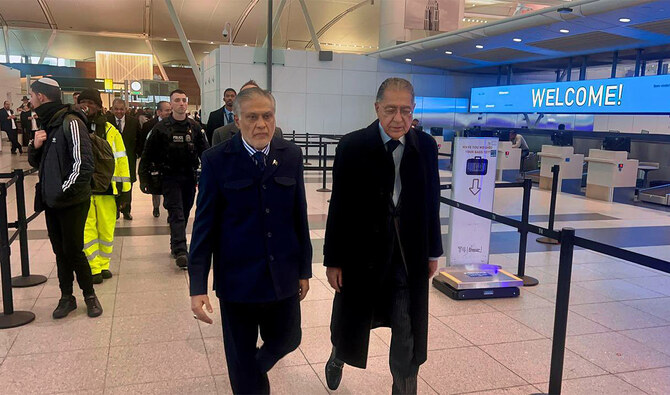
ISLAMABAD: Deputy Prime Minister/Minister of Foreign Minister of Pakistan, Senator Mohammad Ishaq Dar, concluded a busy and productive one-day official visit to New York on 18 February 2026.
During the visit, he participated in a High-Level meeting of the UN Security Council on Palestine, chaired by the UK Foreign Secretary, ahead of the inaugural meeting of the Board of Peace (BoP). He also held a series of bilateral meetings and other official engagements.
At the Security Council, the DPM/FM strongly condemned Israel’s recent unilateral and illegal measures to expand control over the Occupied West Bank and called for their immediate halt and reversal.
Reaffirming Pakistan’s principled position, he reiterated strong support for the Palestinian people’s inalienable right to self-determination through a credible, time-bound political process, in accordance with international law and relevant UN resolutions.
He emphasized that this process must lead to an independent, sovereign, viable and contiguous State of Palestine based on pre-June 1967 borders, with Al-Quds Al-Sharif as its capital.
He expressed hope that the BoP, under the framework of resolution 2803, would contribute to concrete steps toward these objectives.
On the margins of the visit, the DPM/FM held bilateral meetings with his counterparts from Egypt, Jordan, Indonesia and the U.K. He also met with the Minister and Permanent Representative of Palestine, and the Permanent Representative of Syria.
The meetings focused on bilateral relations, regional and international developments and issues of mutual interest.
During the bilateral engagements, the DPM/FM discussed the full spectrum of bilateral cooperation, including political, economic, trade, investment, defence, and people-to-people exchanges.
He underscored the importance of sustained high-level interactions and effective institutional mechanisms to further strengthen bilateral relations.
The visit underscored Pakistan’s active diplomatic engagement at the UN in support of peace, justice and international law, while also advancing key bilateral priorities.