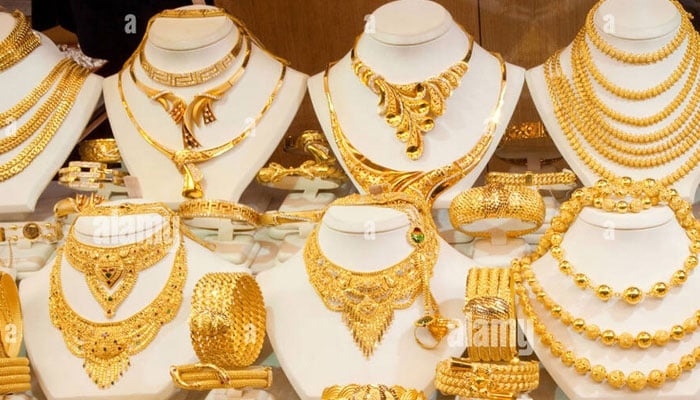
Karachi: The upward trend in gold prices persists nationwide, with another significant increase recorded today.
According to the All Pakistan Gems and Jewellers Association (APGJA), the price of gold per tola has risen by Rs4,300, pushing the new rate to Rs493,662 per tola.
The association further reported that the price of 10 grams of gold has climbed by Rs3,686, bringing it to Rs423,000.
On the international front, gold is currently trading at $4,713 per ounce.
Meanwhile, the price of silver per tola has reached Rs9,869.
Gold prices in Pakistan are influenced by a combination of global and local factors that create frequent and often sharp fluctuations in the domestic market.
Internationally, the price of gold is primarily determined in US dollars per ounce on major exchanges such as COMEX in New York and the London Bullion Market, where it responds strongly to movements in the US dollar index, interest rate decisions by the Federal Reserve, geopolitical tensions, inflation expectations, and global economic uncertainty.
When the dollar weakens or investors seek safe-haven assets during crises, gold prices tend to rise globally, directly impacting Pakistan since the country imports nearly all of its gold requirements.
Locally, the most immediate driver is the prevailing exchange rate of the Pakistani rupee against the US dollar, as gold is priced internationally in dollars and then converted into rupees.
Any depreciation of the rupee leads to an almost proportional increase in domestic gold prices, even if international rates remain stable.
On top of this, the All Pakistan Gems and Jewellers Association adds a modest premium that includes import duties, local taxes, transportation costs, and a small profit margin for jewellers and dealers, which can cause slight variations between cities but generally keeps prices aligned nationwide.
Demand patterns within Pakistan also play a role, particularly during wedding seasons, Eid festivals, and other cultural events when purchases of gold jewellery surge, sometimes pushing premiums higher in the physical market.
Conversely, periods of economic hardship or high inflation can reduce retail demand and lead to selling pressure, though this effect is usually overshadowed by currency depreciation. Government policies, such as changes in customs duties on gold imports or regulatory measures affecting the jewellery trade, can introduce additional volatility, though such interventions are infrequent.
Overall, the interplay between a volatile rupee, international safe-haven flows, and seasonal domestic consumption means gold prices in Pakistan often experience more pronounced and rapid movements compared to many other markets, making it a closely watched indicator of both economic sentiment and currency stability for ordinary citizens and investors alike.