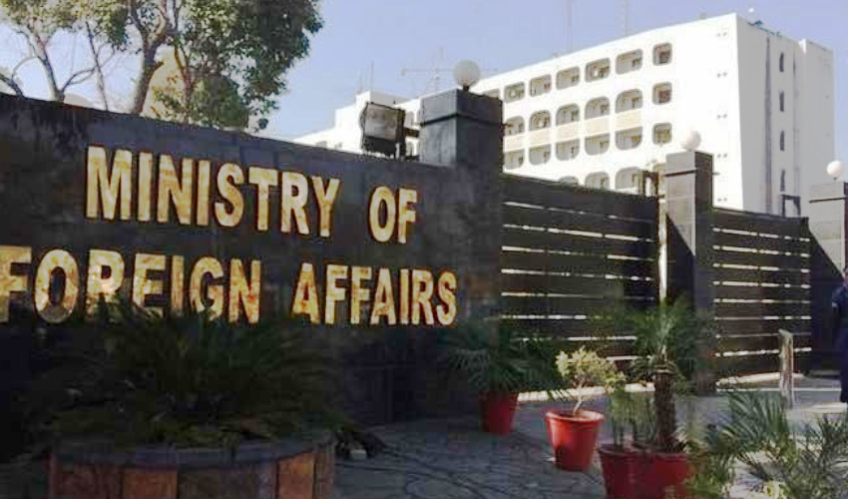
ISLAMABAD: Pakistan’s Foreign Office on Saturday rejected what it termed as “misleading and unfounded commentary” surrounding the repayment of financial deposits to the United Arab Emirates (UAE).
The clarification follows statements by a senior Pakistani official a day earlier, who confirmed that Pakistan had decided to return approximately $3.5 billion to the UAE before the end of the current month.
The official indicated that the Emirati authorities had requested the repayment of the amount, which had originally been extended in 2019 as part of financial assistance to support Pakistan’s balance of payments.
Foreign Office spokesperson Tahir Andrabi emphasized that the deposits were placed under mutually agreed commercial arrangements, reflecting the UAE’s longstanding support for Pakistan’s economic stability.
He stated that, in accordance with the agreed terms, the Government of Pakistan, through the State Bank of Pakistan, is now returning the matured deposits.
“This is a routine financial transaction, and any attempt to portray it otherwise is erroneous and misleading,” the spokesperson said, underscoring the transparency of the process.
Andrabi mentioned the deep-rooted relationship between Pakistan and the UAE, describing it as a “longstanding, fraternal partnership” built on trust and strategic cooperation in areas such as trade, investment, defence, and people-to-people exchanges. He noted that the relationship continues to strengthen over time.
The spokesperson also paid tribute to the late Sheikh Zayed bin Sultan Al Nahyan, acknowledging his pivotal role in fostering enduring ties between the two countries and his special affection for Pakistan.
Meanwhile, officials noted that the repayment decision resolves uncertainty surrounding the deposits, which had been rolled over multiple times since 2019. In recent months, the extensions had become shorter, indicating growing caution on the Emirati side.
In such a scenario, under Pakistan’s ongoing International Monetary Fund (IMF) programme, the country is required to secure approximately $12.5 billion in rollovers from key partners, including China, Saudi Arabia, and the UAE, to maintain foreign exchange reserves and meet external financing needs.