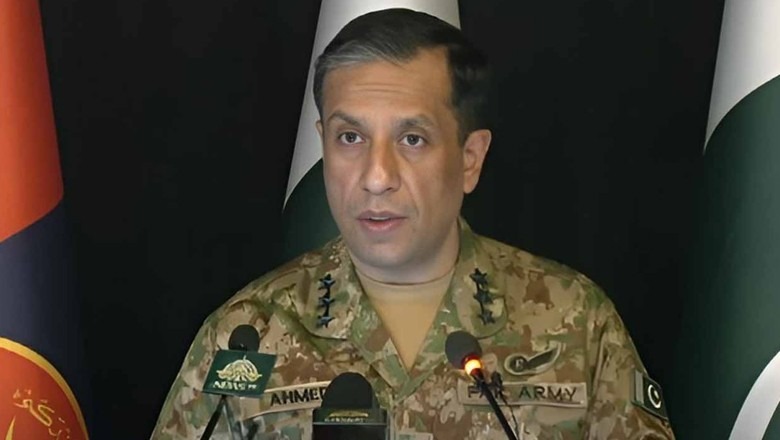
RAWALPINDI: During a press conference in Rawalpindi, Director General ISPR Lieutenant General Ahmed Sharif Chaudhry sharply criticized the Afghan Taliban, stating that there is effectively no governance in Afghanistan and that they have begun allowing the Tehreek-e-Taliban Pakistan (TTP) to operate freely while portraying themselves as representatives of Islam.
He revealed that 80 percent of terrorism incidents in Pakistan are occurring in Khyber Pakhtunkhwa, including a suicide attack on a judicial complex, and asserted that India is behind most of these attacks through its agencies and funding.
The DG ISPR pointed out that the Afghan Taliban made three promises in the Doha agreement none of which have been fulfilled including preventing Afghan soil from being used for attacks on other countries and ensuring women’s rights.
Last year alone saw 27 suicide bombings, 16 in Khyber Pakhtunkhwa, 10 in Balochistan, and one in Islamabad, with two female bombers among the attackers.
Terrorism claimed 1,235 lives, including security personnel and civilians.
He described the militants as Khawarij, against whom divine command is to eliminate them wherever found, and stressed that the Afghan Taliban’s narrative lacks factual basis.
In Balochistan, 1,557 terrorism incidents were recorded in a single year.
He noted a surge in attacks following Operation Marg Bar Sarmachar, in which Pakistan decisively countered Indian aggression.
The DG highlighted that $7.2 billion worth of American weapons were abandoned in Afghanistan, and groups like Al-Qaeda, BLA, TTP, and ISIS maintain safe havens there under Taliban protection.
Around 2,500 foreign militants, none Pakistani, have entered Afghanistan from Syria.
Pakistan has repeatedly urged the Afghan regime to act, but it continues the same approach.
He emphasized that the largest pattern behind terrorism in Pakistan originates from India, that the armed forces are actively fighting this war, and that victory against terrorism is essential, in line with the consensus under the National Action Plan.