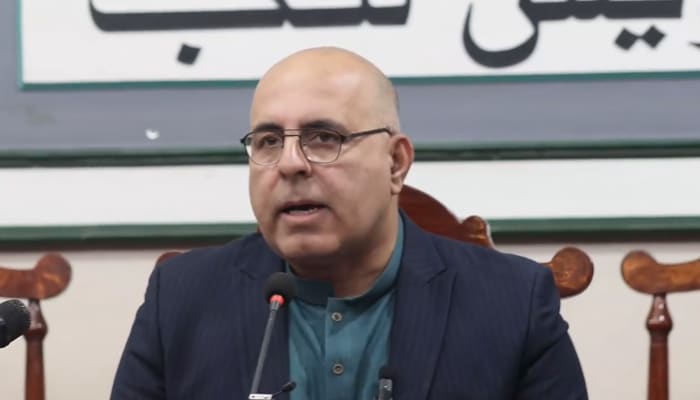
ISLAMABAD: The political deadlock between the government and the opposition, particularly Pakistan Tehreek-e-Insaf (PTI), has come to an end. The federal government has given approval to National Assembly Speaker Sardar Ayaz Sadiq to proceed with the appointment of Mahmood Khan Achakzai as the Leader of the Opposition.
The Speaker has formally initiated the process for the appointment of the Opposition Leader. In this regard, Sardar Ayaz Sadiq, provided a detailed briefing to the House regarding the appointment of the Leader of the Opposition.
He informed members that, under the rules of the National Assembly, the position of Leader of the Opposition is currently vacant and that the nomination process is underway. Furthermore, the Speaker announced that the list of candidates for the post of Opposition Leader must be submitted by 3:00 pm tomorrow.
He further stated that a list bearing the signatures of 76 members has already been submitted, recommending Mahmood Khan Achakzai for the position.
This nomination indicates significant support within the opposition ranks. Moreover, the submitted list has also been verified by Chief Whip Malik Aamir Dogar, who confirmed its authenticity.
He focused on that the entire process has been designed to ensure transparency and adherence to parliamentary rules so that the appointment is made in line with constitutional requirements. The deadline for submitting nominations could be revised, and a new list may be presented to ensure that all legal and constitutional obligations are fulfilled.
He stressed that flexibility would be exercised only to uphold due process and avoid any procedural complications. The Speaker noted that the primary objective of this initiative is to organize and streamline the process of appointing the Opposition Leader in a transparent and orderly manner.
This approach aims to prevent confusion, disputes, or delays that could affect parliamentary functioning.