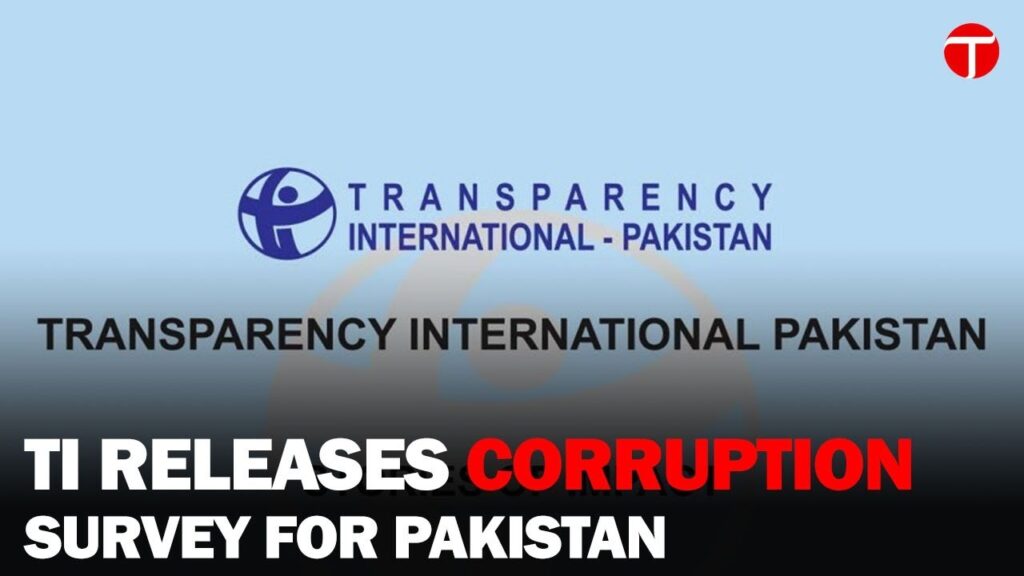
ISLAMABAD: The Transparency International Pakistan (TIP) has released the National Corruption Perception Survey (NCPS) 2025, indicating an important improvement in public perception regarding corruption and governance in the country.
In this regard, as per the survey, 66 percent of Pakistanis reported that they did not have to pay any bribe for government-related work during the past 12 months, an improvement compared to previous years.
The NCPS, conducted from 22 to 29 September 2025, measures public perception of corruption rather than the actual incidence of corrupt practices.
In this sense, the TIP stated that 60 percent of respondents believed the government managed to stabilize the economy through the IMF agreement and Pakistan’s exit from the FATF grey list.
The report noted that “the national economy is moving from crisis towards stability, and from stability towards gradual growth.” Furthermore, the survey gathered responses from 4,000 participants across the country, a substantial increase from 1,600 respondents in 2023.
So far, of these, 55 percent were men, 43 percent women, and 2 percent transgender individuals. Urban respondents accounted for 59 percent, and 41 percent belonged to rural areas.
Meanwhile, 43 percent reported an improvement in their purchasing power, whereas 57 percent said it had declined. Additionally, 51 percent of participants said that tax-exempt NGOs, hospitals, laboratories, and educational or welfare institutions should not charge any fees from citizens.
In addition, 53 percent said such institutions should publicly disclose donor details and donation records to ensure transparency.
However, on sector-wise corruption perception, police ranked highest, followed by tendering and procurement, judiciary, power and energy, and health services.
However, public perception of the police showed a 6 percent positive shift, which TIP described as a “notable improvement indicating progress in institutional reforms and service delivery.” Improvements were also observed in public perception regarding education, land and property matters, local government, and taxation services.
The survey mentioned key reasons behind corruption, including lack of transparency, limited access to information, and delays in resolving corruption cases. Moreover, 59 percent of respondents viewed provincial governments as more prone to corruption.
TIP focused on that NCPS Pakistan is an independent national survey and does not influence or relate to Transparency International’s global Corruption Perceptions Index (CPI). The organization noted that public demand for stronger accountability, transparency reforms, and digitalization of public services indicates growing support for anti-corruption efforts across the country.