
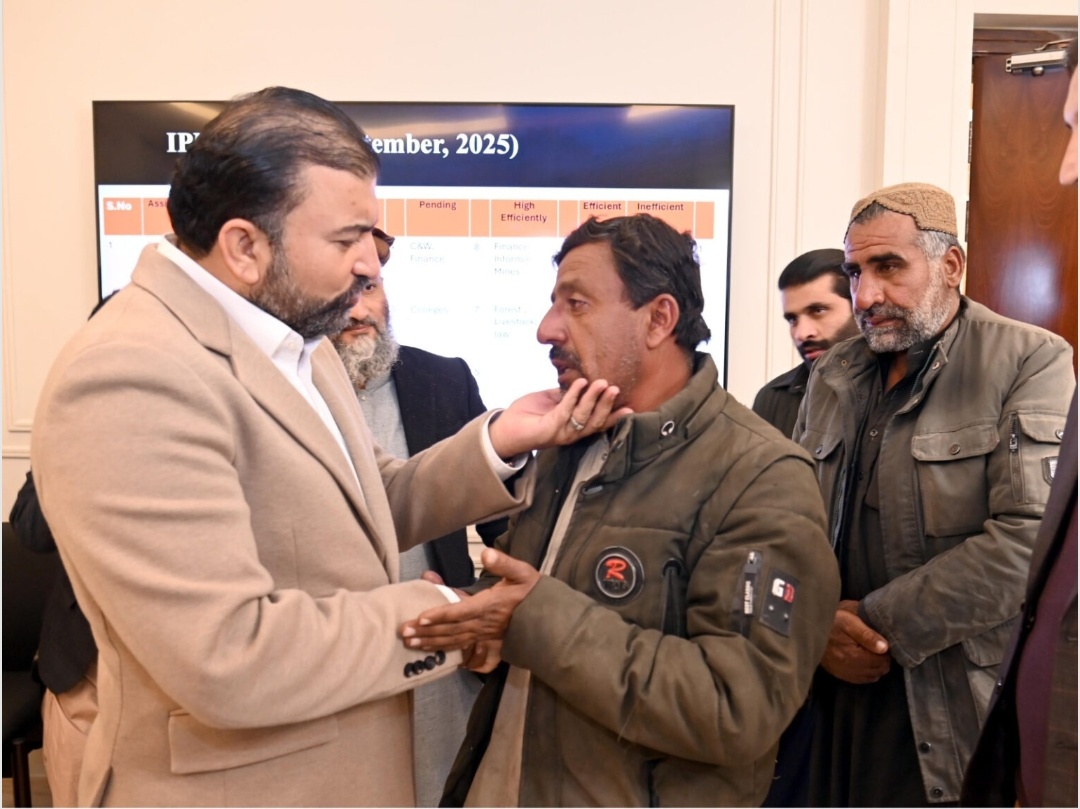
QUETTA: Balochistan Chief Minister Mir Sarfaraz Bugti on Wednesday personally consoled rickshaw driver Abdul Nabi Mengal and announced financial assistance for a new vehicle, following a traumatic incident of police misconduct that led the driver to set his own rickshaw ablaze.
The event unfolded on Quetta’s Airport Road, where an altercation with a traffic police officer left Mengal severely distressed. In a state of mental anguish over the confrontation, the devastated driver subsequently set fire to his rickshaw, his source of livelihood.
Taking strict notice, Chief Minister Bugti summoned Mengal, hugged him, kissed his forehead, and expressed complete solidarity. He announced immediate financial assistance for the purchase of a new rickshaw under a compensation scheme for the affected driver.
Concurrently, the Chief Minister ordered the immediate suspension of the traffic police officer involved and directed a transparent investigation into the incident. He emphasized that mistreatment of the public and abuse of authority would not be tolerated.
“Police personnel are the guardians of the public and their dignity,” stated CM Bugti, warning that action would be taken without discrimination against any official found deviating from their duties. He reiterated his government’s resolve to stand with the working class and promised effective measures to prevent such occurrences in the future.
Meanwhile Balochistan Governor Jaffar Khan Mandokhail on Tuesday urged the swift completion of the Zhob Bypass, calling it critical for boosting economic growth and improving access to national trade markets.
During a meeting with Federal Minister for Communications and Estihkam Party President Abdul Aleem Khan, the governor stressed the need for immediate funding for the project. He said a modern and well-planned transport network forms the backbone of a strong economy
Mandokhail said improved infrastructure enhances intercity and rural connectivity while supporting trade, agriculture, and tourism. He noted that upgraded roads reduce travel time, cut logistics costs, expand market access, and attract investment.



