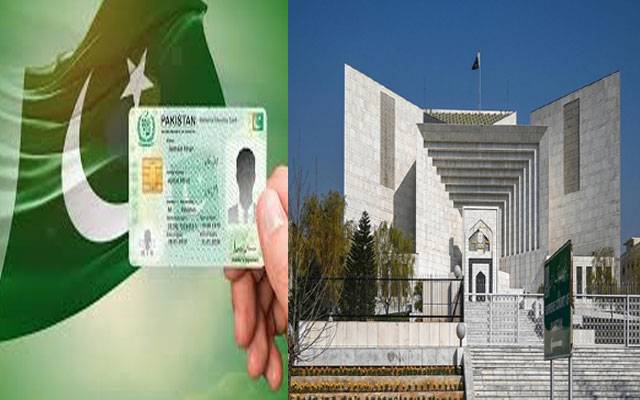
ISLAMABAD: The Supreme Court of Pakistan has declared that blocking a citizen’s Computerized National Identity Card (CNIC) over unpaid dues is unlawful, overturning an earlier decision of the Sindh High Court.
The three-page judgment, authored by Justice Muneeb Akhtar, firmly established that a CNIC is not a luxury, but a fundamental necessity for everyday life. The ruling underlined that depriving a citizen of their identity document effectively restricts access to essential services and participation in society.
The Court questioned the broader implications of such judicial orders.
“Will courts tomorrow order the disconnection of electricity and water connections for recovery of money?” the bench observed, highlighting concerns over proportionality and judicial limits.
The case traces back to 2016, when a trial court issued a decree for payment against a petitioner. Upon failure to comply with the payment order, the trial court directed authorities to block the individual’s CNIC. The decision was later upheld by the Sindh High Court, prompting the matter to be taken up before the Supreme Court.
The apex court clarified that Section 51 of the Civil Procedure Code does not provide any provision for blocking a CNIC as a mode of executing a decree. The judgment further noted that amendments made to civil procedure laws by the Peshawar High Court are not applicable in the province of Sindh.
The Court concluded that, in the absence of explicit legal authority, no court may order the blocking of a citizen’s identity card. Such an action, it observed, not only exceeds legal boundaries but also infringes upon fundamental rights guaranteed under the Constitution.