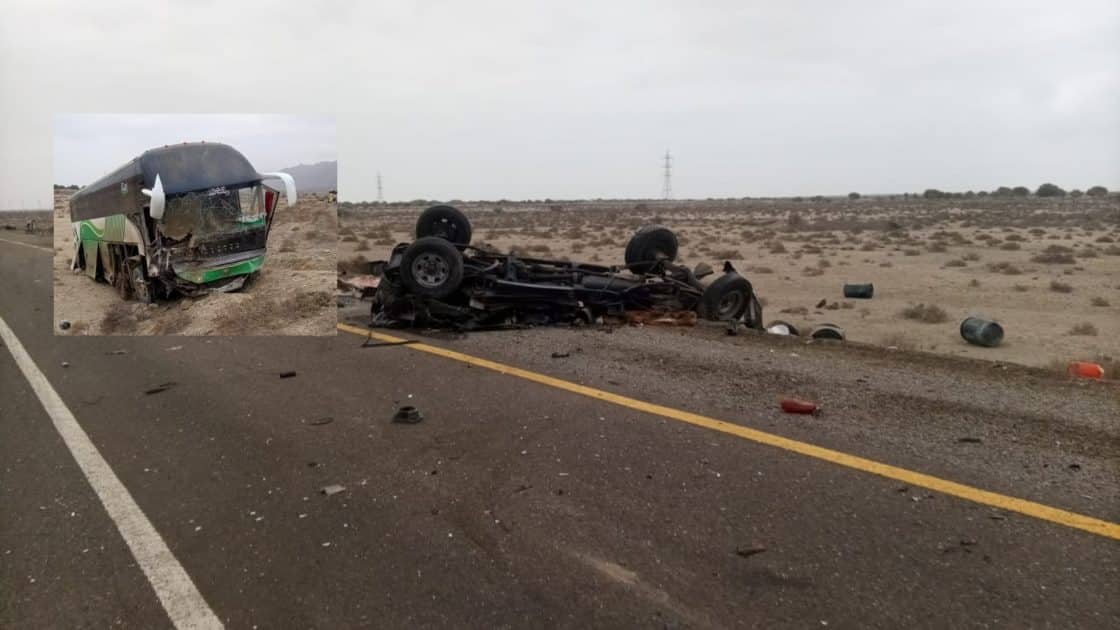
QUETTA: A fatal collision on the Turbat-Kech Highway between an Al-Maaz Transport bus and two pickup trucks has left two individuals dead, highlighting urgent concerns over road safety.
According to official reports, the tragic crash occurred on the morning of September 9 at approximately 6:30 AM in the Makula area of Pasni, resulting in the immediate deaths of Amjad, son of Abdul Wahid Miandad from Pasni, and Sagheer, son of Ghafoor from Pydark.
Following the impact, the bus driver, Saddam Hussain from Bahman Turbat (Kech), and the second driver, Javed Ali alias Jahoo from Mashi Awaran, fled the scene alongside other passengers.
Although an FIR was registered on September 11 under the supervision of Kalmat SHO Abdullah Abid, naming both the vehicle and the drivers, grieving families continue to demand justice amid mounting questions regarding why the bus has not been transferred to the Pasni police station and why the responsible drivers remain unapprehended.
Public outcry persists for transparency, accountability, and immediate legal action against any administrative negligence or collusion surrounding this fatal collision on the Turbat-Kech Highway.
Road accidents in Balochistan have escalated into a profound humanitarian crisis, driven by a dangerous combination of crumbling infrastructure, single-lane highways, and reckless driving habits.
As the largest province by area, Balochistan connects major trade routes, yet its primary arteries—such as the Quetta-Karachi Highway and the Makran Coastal Highway—are frequently labeled as “killer roads” due to rampant potholes, sharp unlit turns, and a total absence of dual-carriageway separations.
Heavy passenger buses and overloaded commercial trucks often travel at breakneck speeds over exhausted hours, compounding the hazards posed by foggy mountain passes and flash floods.
Furthermore, emergency response systems across remote districts are woefully under-resourced, lacking trauma centers, proper ambulance networks, and efficient communication channels to provide timely medical intervention.
Consequently, wounded crash victims often bleed to death before reaching distant provincial hospitals.
ALSO READ: Kohlu DG Khan highway accident: Speeding Vehicle Crash Claims One Life
Addressing this relentless carnage requires urgent structural investments in dual carriageways, strict enforcement of traffic laws, mandatory rest periods for commercial drivers, and the establishment of fully equipped roadside trauma units to protect civilian lives across the region’s vast transit networks.