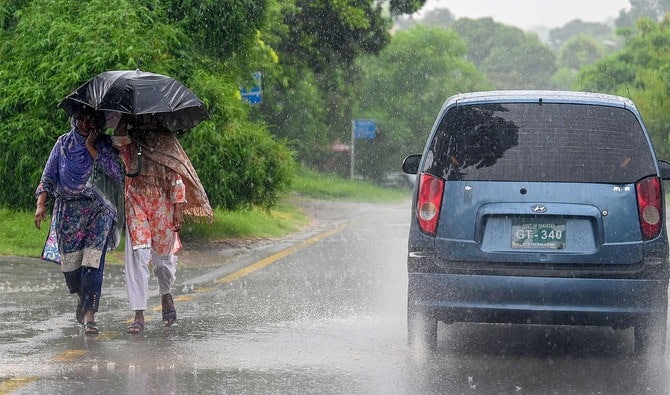
LAHORE: The Provincial Disaster Management Authority (PDMA) Punjab has issued an official alert for the eighth spell of monsoon rains across the province, predicting widespread downpours from August 29 to September 5.
According to PDMA spokesperson, rains are expected in Rawalpindi, Murree, Galyat, Jhelum, Chakwal, Talagang, Attock, Sialkot, Sheikhupura, Narowal, and Gujrat.
Additionally, heavy downpours are anticipated in Lahore, Mandi Bahauddin, Gujranwala, Wazirabad, Hafizabad, Kasur, Okara, Nankana Sahib, Sargodha, Khushab, Mianwali, Noorpur Thal, Faisalabad, Jhang, Toba Tek Singh, Layyah, Bhakkar, Sahiwal, and Pakpattan.
DG PDMA Irfan Anwar Jappa has warned of urban flooding in major urban centers like Lahore, Rawalpindi, Gujranwala, Gujrat, and Sialkot, alongside landslide risks in Murree and Galyat, and flash flooding in hill torrents.
Commissioners and deputy commissioners have been directed to ensure pre-emptive measures, while relevant departments including health, irrigation, communication, and local government remain on high alert.
Citizens are advised to exercise extreme caution, avoid unnecessary travel, stay away from electric poles and dilapidated structures, and contact the PDMA helpline 1129 in case of any emergency.
Understanding the Monsoonal Dynamics of Monsoon in Pakistan 2026
The current weather pattern highlights the complex and volatile nature of the monsoon in Pakistan 2026, a season that continues to test the nation’s climate resilience and disaster management preparedness.
Seasonal monsoons remain the primary lifeline for Pakistan’s agrarian economy, replenishing vital water reservoirs and supporting agricultural output.
However, intensified climate change factors have increasingly converted these beneficial weather systems into extreme hydro-meteorological hazards.
In recent years, shifting weather anomalies have triggered erratic cloudbursts, unprecedented flash floods, and prolonged dry spells, severely threatening vulnerable communities across urban and rural landscapes.
The 2026 monsoon cycle underscores an urgent structural need for enhanced meteorological forecasting, robust urban drainage upgrades, and proactive community-level disaster mitigation frameworks.
Protecting civilian lives and minimizing infrastructural damage during high-intensity spells requires continuous coordination between provincial disaster authorities, local administrations, and public awareness campaigns.
ALSO READ: MET Department Predicts Heavy Rains across Pakistan
As climate volatility becomes the new operational norm, strengthening long-term adaptation strategies remains essential for safeguarding Pakistan’s socio-economic stability against recurring environmental shocks.