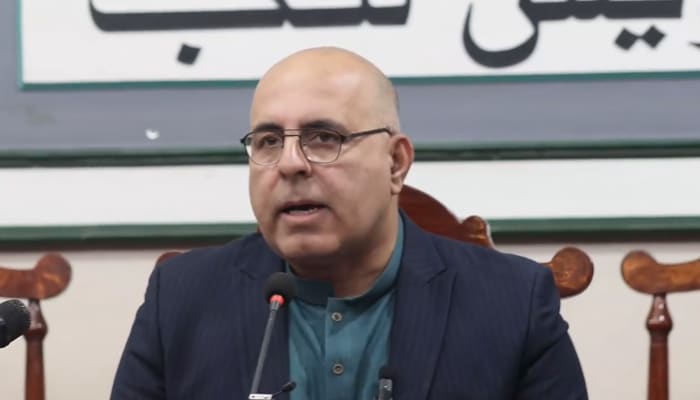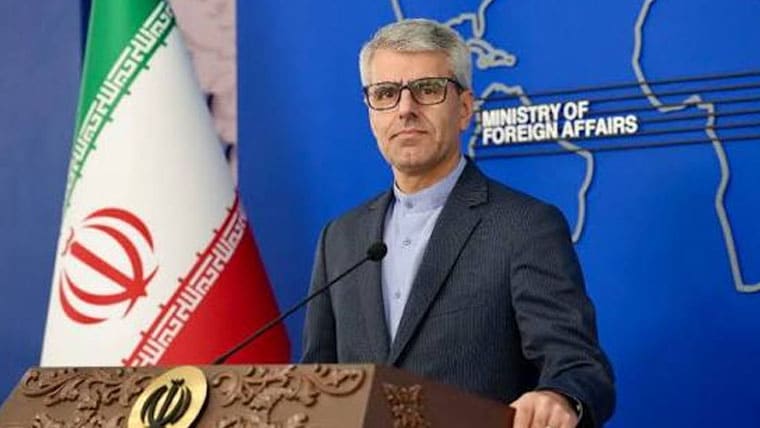
TEHRAN : The Iranian Ministry of Foreign Affairs has addressed ongoing regional security developments, clarifying that Tehran has not received any official invitation or formal proposal to join the newly established Mecca defense pact.
During a media briefing, Foreign Ministry Spokesperson Esmaeil Baghaei noted that while formal engagement regarding the pact has not been extended to Tehran, Iran maintains deep historical and diplomatic ties with Pakistan, Türkiye, and Saudi Arabia.
He emphasized that Pakistan is actively engaged in diplomatic efforts to de-escalate tensions in the region, and upcoming high-level dialogues will focus heavily on bilateral cooperation and core security matters.
Baghaei also strongly rejected ongoing economic pressure and unilateral sanctions from the United States, labeling them as entirely illegal.
Additionally, Tehran announced an upcoming diplomatic visit by Oman’s Foreign Minister, Sayyid Badr Albusaidi, aimed at enhancing political consultations among the littoral states of the Strait of Hormuz to advance regional peace and stability.
Understanding the Geopolitical Dynamics and Iran’s Perspective on the Mecca Defense Pact
The formation of the Mecca defense pact marks a profound structural evolution in Middle Eastern security architectures, bringing together major regional powers to coordinate defense strategies independently of traditional Western oversight.
For Tehran, navigating this newly shaped alignment involves a careful balance between diplomatic pragmatism and strategic wariness.
While Iranian officials have publicly downplayed the threat perception of the pact—framing it as a sign that regional states are moving away from relying on external security brokers—the underlying calculations reflect intense competition for regional influence.
A key element of Iran’s edge or strategic positioning regarding such coalitions lies in its emphasis on indigenous, inclusive security frameworks—such as its historical proposals for Hormuz regional cooperation.
By maintaining robust bilateral ties with key signatories like Pakistan and Türkiye, Tehran seeks to prevent these alliances from becoming hostile blocs directed against its interests.
Furthermore, as regional states look for homegrown solutions to mitigate spillover conflicts, Iran leverages its geopolitical gravity and maritime positioning to ensure that any comprehensive regional security architecture must factor in Tehran’s economic and security equities.
ALSO READ: Another country enters the Mecca Agreement
Engaging through intermediaries like Oman further allows Iran to project a cooperative posture while safeguarding its vital trade and transit corridors.