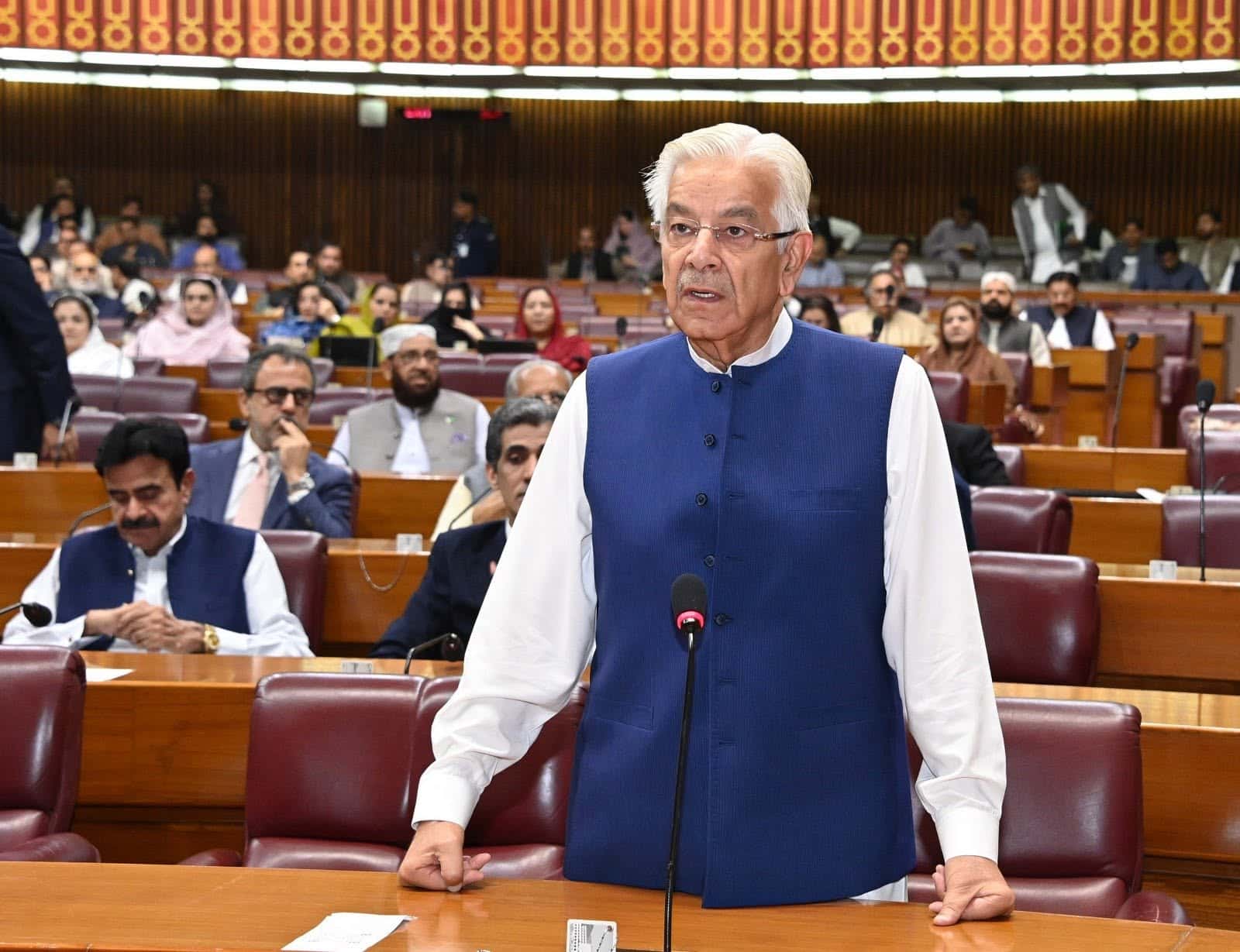
ISLAMABAD: Pakistan’s Defence Minister Khawaja Asif said on Tuesday that terrorism remained the country’s most serious security challenge and described Afghanistan as the main source of the threat.
Addressing the National Assembly, Asif paid tribute to Pakistani security personnel killed in counterterrorism operations. He said sacrifices by soldiers and their families would not go in vain.
Pakistan’s armed forces had recently defeated an adversary “five times larger,” he said, referring to the country’s military achievements and resilience.
The minister urged lawmakers to avoid political point-scoring on national security issues. He said the sanctity of parliament should be respected and unsubstantiated accusations should be avoided.
Asif also highlighted what he described as a major diplomatic success for Pakistan. He said recent diplomatic efforts involving Iran and the United States had enhanced Pakistan’s international standing. Any easing of sanctions on Iran would benefit both Pakistan and Balochistan, he added.
Prime Minister Shehbaz Sharif and Field Marshal Syed Asim Munir were credited with helping secure diplomatic gains, according to the minister.
On relations with Afghanistan, Asif said several rounds of talks had been held with Afghan authorities. Mediation efforts involving Qatar and Türkiye had also taken place. However, no lasting breakthrough had been achieved.
He said he had personally visited Afghanistan twice, accompanied by Pakistan’s intelligence leadership. Multiple meetings with Afghan officials were held, but written guarantees regarding cross-border militancy were not provided.
According to Asif, Afghan authorities had sought financial assistance worth 10 billion rupees during discussions. Pakistan had shown willingness to extend support, he said, but security assurances were not formally offered.
The minister said terrorism continued to threaten Pakistan’s stability and that meaningful guarantees would be required before any negotiations with militant groups could succeed.
He also called for collective efforts to restore peace in Balochistan. Responsibility for improving security and protecting public infrastructure was shared by all political stakeholders, he said.
Asif argued that international actors had benefited from Pakistan’s role in regional conflicts before leaving the country to deal with the consequences. Pakistan continued to bear the burden of terrorism, he added.
Also Read: More Than 20 Terror Groups Active in Afghanistan, Confirms Russia
The minister also criticized what he described as foreign-funded organizations attempting to influence domestic political issues, including matters related to refugee representation.
His remarks came amid ongoing security operations across Pakistan and continued concerns over militant activity along the country’s western border.