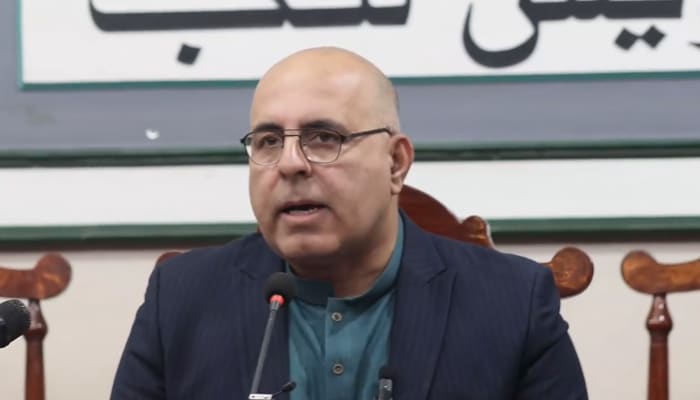
ISLAMABAD: The starling disclosure by Federal Minister for Defence Khawaja Muhammad Asif has brought renewed attention to an issue many believed was rooted only in poverty, but which, according to the minister, has evolved into something far more complex and troubling.
Khawaja Asif expressed serious concern over the rapid expansion of organized networks of professional beggars operating across the country. He revealed that begging is no longer merely a reflection of economic hardship, but has transformed into a structured and profitable business, run by influential and well-organized groups.
In this regard, the defence minister stated that powerful contractors and organized mafias are actively managing these networks, exploiting vulnerable individuals and generating millions of rupees through what he described as an inhumane practice.
Many of the people seen begging on the streets today are not genuinely deserving individuals, but rather part of a larger, coordinated system. Khawaja Asif referred to this network as the country’s largest so-called “employment sector,” a comment he clarified was made to underline the seriousness and scale of the issue rather than to normalize it.
He noted that the operational links of these groups are deeply rooted, making the problem far more difficult to address than it appears on the surface. Furthermore, the minister warned that such organized activities are damaging the country’s social fabric and undermining genuine efforts to support those truly in need.
He focused on that the growing presence of professional begging rings is not only misleading the public but also diverting resources away from deserving segments of society. Khawaja Asif’s statements have sparked widespread discussion, with many political and social observers describing his statement as a rare and realistic acknowledgment of a long-ignored problem.
However, analysts caution that recognizing the issue is only the first step.