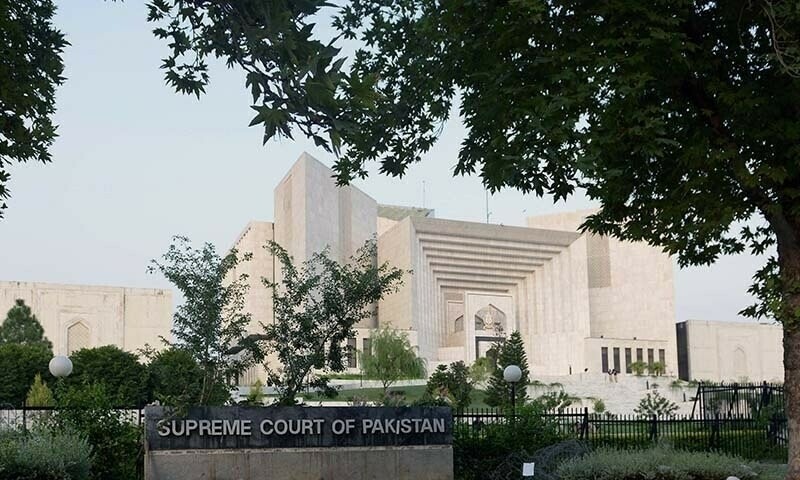
ISLAMABAD: The Supreme Court has clarified that family courts cannot, on their own initiative, convert a woman’s plea for divorce into khula proceedings a practice that, the court observed, has often resulted in women losing their lawful right to dower.
The judgement, delivered by a two-member bench headed by Chief Justice of Pakistan Yahya Afridi, sets aside earlier decisions by lower courts and raises critical questions about how dissolution of marriage cases are being handled across the country.
In this sense, at the heart of the case was an appeal filed by Naila Javed, who challenged a 2025 verdict of the Peshawar High Court’s Abbottabad Bench. The high court had upheld a family court’s decision dissolving her marriage through khula, requiring her to forgo her remaining dower.
Ms Javed maintained that she had never sought khula and had instead approached the court under statutory grounds that entitled her to a divorce with full financial rights intact.
In this regard, writing for the bench, Justice Musarrat Hilali noted a recurring pattern in family courts where expressions of marital aversion by women are treated as grounds for khula, even when other legally recognised grounds for divorce are available.
The Supreme Court went on to dissolve the marriage on the basis of talaq rather than khula and ordered the recovery of the wife’s unpaid dower amounting to Rs1.2 million through the executing family court.
However, the reasoning behind this decision and its broader legal foundation introduces complex questions that extend beyond a single dispute. So far, the husband’s second marriage, contracted without fulfilling mandatory legal requirements.
The court also mentioned how both the family court and the appellate forum failed to examine this ground, despite it being available on record. The apex court’s observations raise deeper concerns about judicial overreach, women’s financial rights, and the boundaries of judicial discretion in personal law matters.