SRINAGAR: The actions against pro-freedom leaders in Indian-administered Jammu and Kashmir continue, with an Indian court convicting a well-known Kashmiri woman leader in what rights groups describe as a politically motivated case.
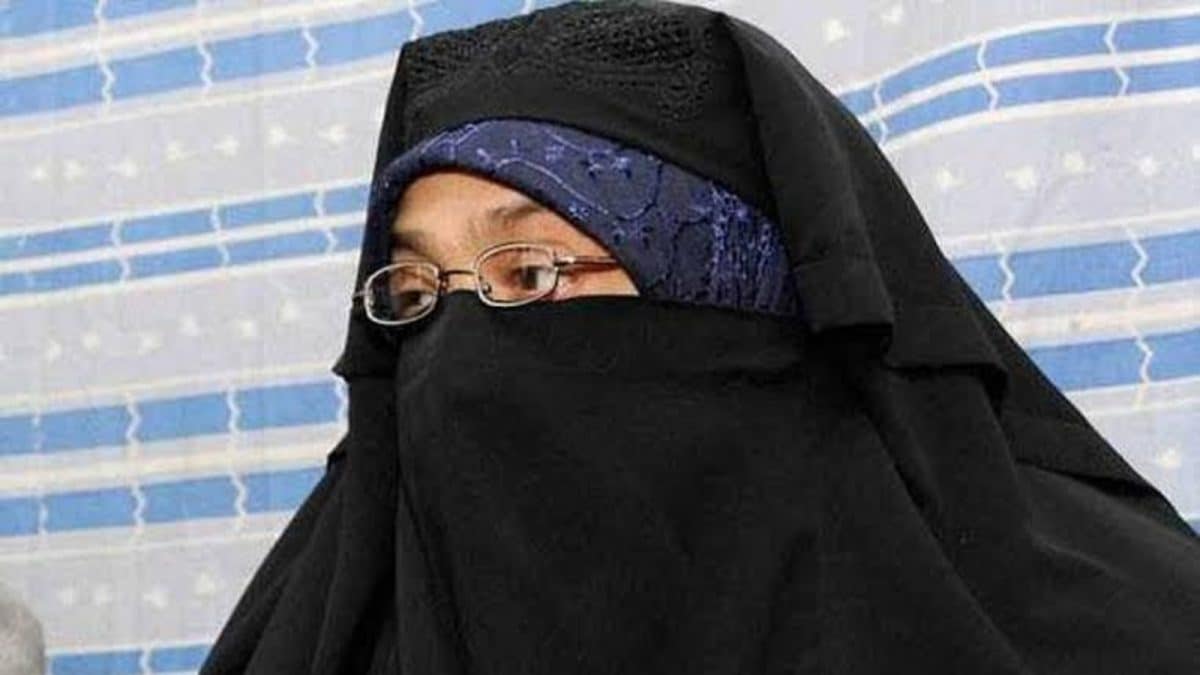
Furthermore, an Indian court has found Asiya Andrabi, a senior pro-freedom leader and head of the women’s organization Dukhtaran-e-Millat, guilty in a political case.
The verdict also applies to two other Kashmiri leaders, Fahmida Sofi and Nahida Nasreen, who were tried in the same matter. The court is expected to announce sentences for all three on January 17.
In this sense, the case was heard in a court linked to India’s National Investigation Agency (NIA), an institution that has frequently been criticized by Kashmiri political circles and human rights observers for its role in cases involving dissenting voices from the region.
So far, Asiya Andrabi was arrested in April 2018 under what Kashmiri groups describe as fabricated and politically driven charges. She is the founding leader of Dukhtaran-e-Millat, a women-led organization established in 1987 that has been actively involved in advocating for the political rights of the Kashmiri people.
Furthermore, Kashmir Media Service further reports that Andrabi’s husband, Ashiq Hussain, has also been imprisoned for nearly three decades in India under multiple cases that critics argue lack credibility. Pro-freedom circles say such prolonged detentions indicate a broader pattern of legal pressure being used to silence political leadership in the disputed region.
Hurriyat supporters argue that punitive measures against political leaders, particularly women activists, are unlikely to weaken the long-standing demand of the Kashmiri people for a peaceful and just resolution of the conflict. Instead, they say, such actions risk further deepening mistrust and alienation.
The Indian authorities maintain that legal proceedings are carried out in accordance with the law, Kashmiri political groups and rights advocates insist that lasting peace in the region can only be achieved through dialogue, respect for fundamental freedoms, and addressing the political aspirations of the people.