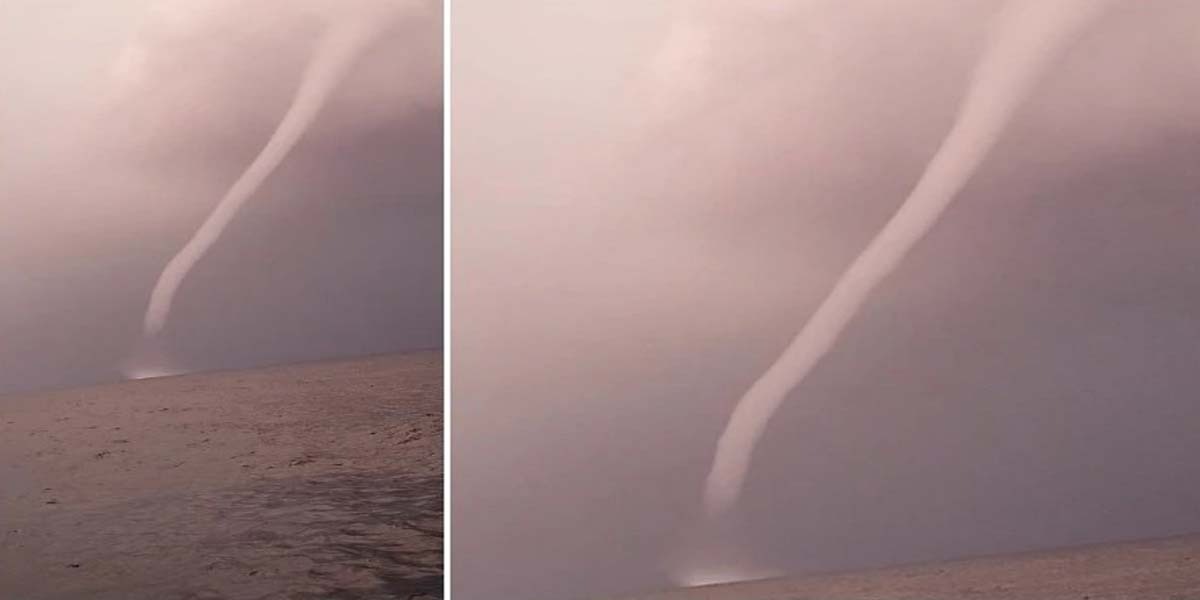
GWADAR: A rare meteorological event was observed in Gwadar and surrounding areas on Monday, drawing attention from meteorologists and local residents. A waterspopout, a type of weak tornado, formed as part of the effects of a western disturbance over southwestern Balochistan.
The Meteorological Department warned that the western low-pressure system could bring rain to the region within the next 24 hours.
Meteorologists explained that landspouts and waterspouts are rotating columns of air, but they form in different locations. Waterspouts develop over water, while landspouts form over land.
Landspouts are considered weaker than traditional tornadoes, which descend from clouds. They resemble dust columns but remain connected to the cloud base.
Former Director General of Meteorology Sardar Sarfraz said the Gwadar landspout appeared due to the incoming western disturbance. He noted that waterspouts have been observed previously in Gwadar and other coastal areas of Pakistan.
The last significant waterspout in Pakistan was recorded on Jan. 20, 2019, about 57 nautical miles off the coast of Gwadar, creating a dramatic storm-like scene. Another rare event was reported by fishermen near Sakoni Kalmat on Feb. 28, 2016.
Experts clarified that despite their names, landspouts and waterspouts are not filled with water. They are columns of rotating air extending from clouds to the ground or sea surface. The visible water in a waterspout results from condensation within the cloud.
There are two types of waterspouts: tornadic and fair-weather. Fair-weather waterspouts usually form from slow-moving clouds and can remain stationary. Both types require high humidity and relatively warm water temperatures.