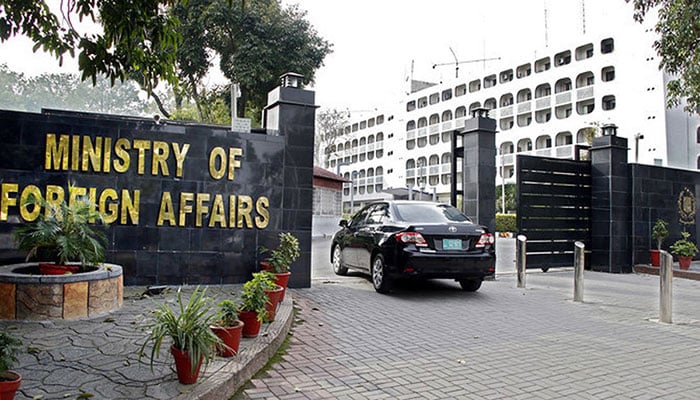
ISLAMABAD: Pakistan’s Foreign Office spokesperson stated that the presence of terrorist elements in Afghanistan poses a serious threat to regional peace and security, adding that recent United Nations reports clearly support Pakistan’s long-standing position.
During the weekly press briefing in Islamabad, the spokesperson said Pakistan has concrete and credible evidence of terrorist groups operating from Afghan soil, including proof of logistical support, intelligence-based information, and reliable reports detailing the identities, numbers, and financial backing of these militants.
He added that diplomatic channels between Pakistan and Afghanistan remain active, with ambassadors stationed in both capitals and bilateral issues regularly discussed through diplomatic means.
The spokesperson further said that the issue of terrorist groups was also discussed at a regional meeting held in Iran, where Tehrik-i-Taliban Pakistan (TTP) and other militant organizations were reviewed in a broader regional context.
He emphasized that such regional mechanisms are important for consensus-building and consultation.
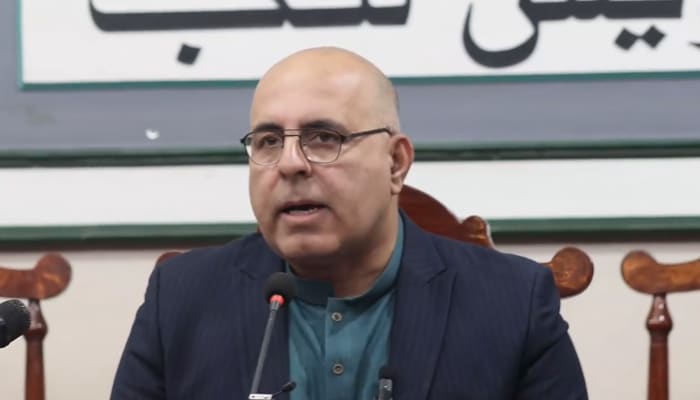
Foreign Office spokesperson Tahir Andrabi noted that terrorist groups not only threaten regional peace but also undermine Afghanistan’s own stability and development.
He said UN Security Council reports confirm the presence of multiple terrorist organizations in Afghanistan, with specific reference to TTP and other foreign militants, calling them the biggest obstacle to Pakistan-Afghanistan relations.
Commenting on speculation about an international stabilization force, he said consultations are ongoing in some global capitals but Pakistan has received no formal request and has made no decision.
On the shooting incident in Australia, he said linking Pakistan to the Bondi Beach attack was irresponsible, criticized unverified reporting by Indian media, and noted that the attacker was later confirmed to be of Indian origin and an Indian passport holder.
According to the UN, Al-Qaeda maintains close ties with the Taliban, while ISIS-Khorasan is considered the Taliban’s main adversary.
The report identifies the TTP as the most significant regional threat, stating that it continues to conduct operations from sanctuaries inside Afghanistan.
It also notes divisions within the Taliban leadership, with some senior figures viewing the TTP as harmful to relations with Pakistan, while others continue to support it.
The UN states that the TTP carried out more than 600 attacks in Pakistan in 2025, many of them complex, with most suicide bombers being Afghan nationals.
The report also acknowledges Pakistan’s progress in counterterrorism efforts, including the arrest of ISIS-Khorasan spokesperson Sultan Aziz Azzam and other key militants.
The Taliban have repeatedly denied allowing Afghan soil to be used for cross-border attacks, but multiple international reports and regional governments continue to raise concerns over militant activity originating from Afghanistan.
Armed groups such as Tehrik-i-Taliban Pakistan (TTP) and ISIS-Khorasan have been planning and launching attacks in neighboring countries while operating from safe havens inside Afghan territory.