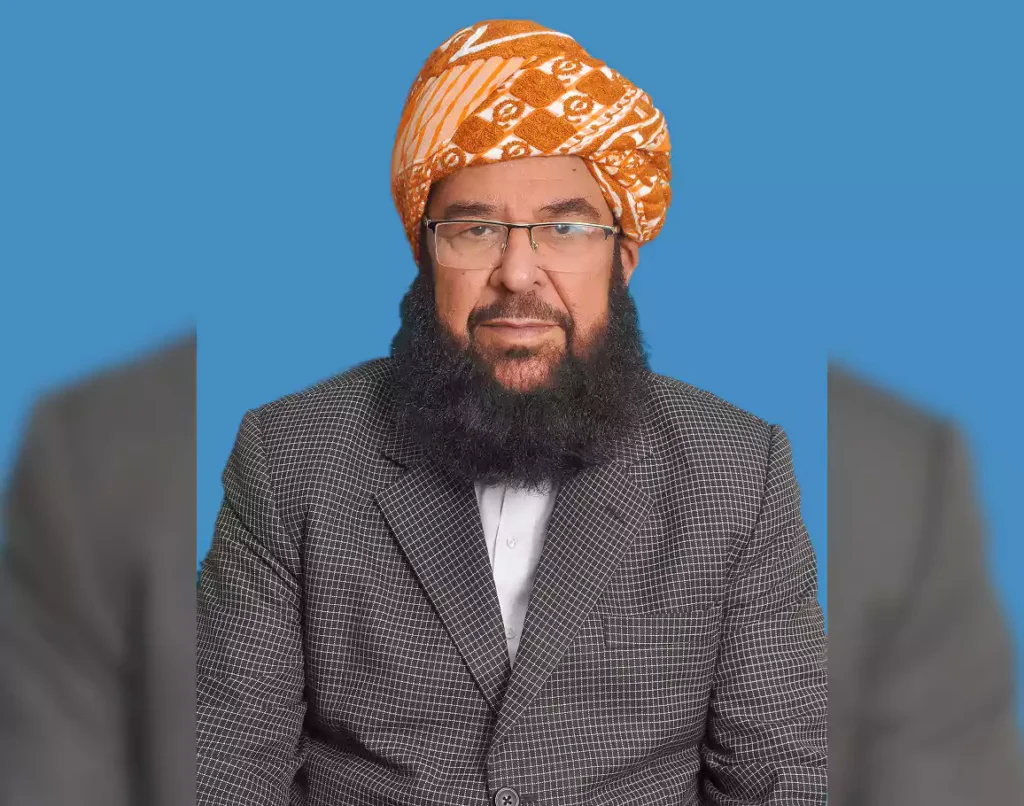
QUETTA: Maulana Abdul Ghafoor Haideri, Central Secretary General of the Jamiat Ulema-e-Islam (JUI-F) and former Deputy Chairman of the Senate, issued a stern warning on Wednesday that certain constitutional amendments could “darken the country’s future,” while also dismissing the Balochistan Chief Minister’s recent statements as self-serving.
Speaking to the media upon his arrival in Quetta, where he was given a warm welcome by senior party leaders, Haideri did not specify the amendments in question but framed them as a significant national threat. His comments are seen as a critique of recent political maneuvers by the central government.
Turning to provincial matters, Haideri launched a direct attack on Chief Minister Mir Sarfraz Bugti, alleging his public statements, particularly on social media, were made for “personal interests” and did not represent the will of the people or state institutions. “The corporation had no role,” he asserted, in an apparent reference to Bugti’s recent remarks on governance.
Highlighting simmering discontent, Haideri revealed he had met with a gathering of 100 youths who expressed profound “grief and anger over the lack of rights.” He cautioned that the state’s reliance on force to address grievances would only fuel further unrest. Advocating for a parliamentary solution, he insisted that the critical issue of resource distribution for provinces like Balochistan must be resolved “through legislation in the National Assembly.”
His return was marked by a show of party unity, with prominent JUI-F figures including Maulana Ghulam Qadir Qasmi and Maulana Abdul Hameed Arif present to receive him.
Meanwhile in a sharp critique of the provincial administration, Nawab Muhammad Aslam Raisani, the Chief of Sarawan and former Chief Minister of Balochistan, has condemned the frequent transfer of deputy commissioners as a glaring example of “bad governance” that undermines public service.
Speaking to the media outside the Balochistan Assembly on Wednesday, the seasoned political leader dismissed official claims of good governance. “Government officials take pride in their good governance, but we laugh at it,” Raisani stated, highlighting a disconnect between official rhetoric and ground reality.