ISLAMABAD: Pakistan has inaugurated its first dedicated testing laboratory for photovoltaic (PV) modules, indicating a vital step toward strengthening the country’s renewable energy infrastructure and improving the quality of solar technology available in the local market.
The facility has been established with financial and technical assistance from the Republic of Korea.
Furthermore, the Pak-Korea Testing Laboratory for PV Modules and Allied Equipment has been developed jointly by the Ministry of Science and Technology (MoST) and the Korea International Cooperation Agency (KOICA).
The project was completed through a $9.5 million grant from KOICA, supplemented by a Rs185.8 million contribution under Pakistan’s Public Sector Development Programme (PSDP).
The laboratory will begin full-scale operations after securing accreditation under ISO-17025 standards, including compliance with IEC-61215 and IEC-61730, which govern global benchmarks for solar module performance and safety.
In this regard, the Pakistan Standards and Quality Control Authority (PSQCA), an attached department of MoST, has started the process of adding solar panels to its list of mandatory items.
So far, once formalised, the authority will conduct random testing of samples from each imported consignment at the new facility to ensure that all solar panels entering the country meet required quality standards.
Moreover, KOICA played a central role in developing the laboratory, overseeing its construction and installing, commissioning, and testing all required equipment.
The agency also arranged a nine-month training programme for local engineers and technical staff to ensure the laboratory can operate independently and efficiently.
So far, the PSQCA aims to secure Certification Body Testing Laboratory (CBTL) status for the facility.
This accreditation would enable the lab to issue internationally recognised IEC compliance certificates, supporting local manufacturers seeking to export PV modules to markets in Europe and Central Asia.
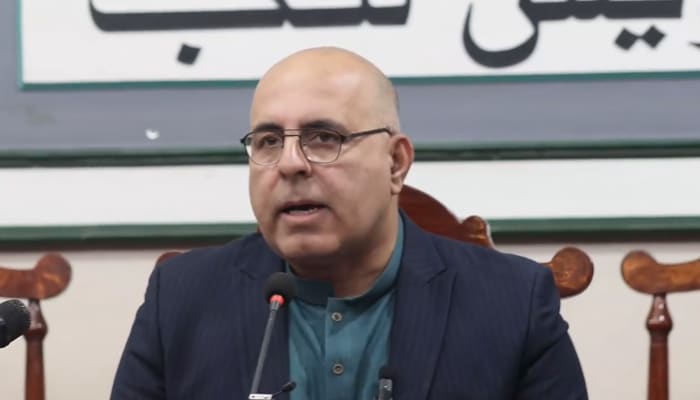
The laboratory was formally inaugurated on Saturday by KOICA President Chang Won Sam and Korean Ambassador to Pakistan Park Jae-Lark.
Sam said that reliable, clean energy is essential for Pakistan’s economic future.
“The country’s abundant sunshine offers tremendous potential for solar energy,” he said, expressing confidence that Pakistan is well-positioned to accelerate its clean energy transition. He added that Korea remains committed to supporting Pakistan in enhancing its capacity to test and certify solar technologies in line with global standards.