PESHAWAR: Khyber Pakhtunkhwa is facing growing challenges, including terrorism and social issues, due to the large number of Afghan refugees residing in the province illegally.
According to a report by the global journal Eurasia Review, the presence of undocumented Afghan residents has significantly increased the strain on provincial resources.
Their settlement is directly impacting security, social infrastructure, public services, and available resources.
Nearly 1.7 million undocumented and 1.3 million registered Afghan refugees have affected housing, healthcare, education, and employment in Pakistan.
Research by SDPI highlights that the influx of Afghan refugees has reduced access to education for 30% of the local population and healthcare for 58%.
The South Asia Times notes that the additional burden of refugees has increased unemployment in the province, putting pressure on the local economy.
Many Afghan traders in Khyber Pakhtunkhwa have grown wealthy without paying taxes, negatively affecting Pakistan’s revenue collection.
Overall, the arrival of refugees has had adverse effects on both short-term and long-term economic growth.
Economic activity in the province has slowed, and excessive use of natural resources by refugees has contributed to serious environmental challenges.
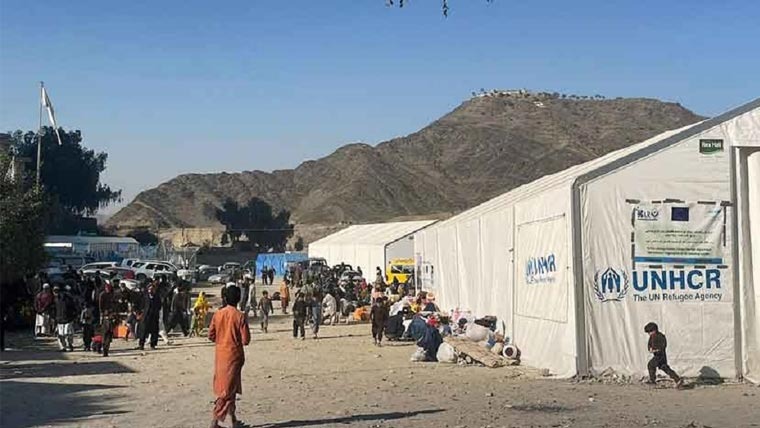
In response, the federal government’s phased plan has de-notified 54 Afghan refugee camps, including 43 in Khyber Pakhtunkhwa, 10 in Balochistan, and one in Punjab.
However, Khyber Pakhtunkhwa’s provincial government has been slow to implement the federal directives, with only two of the 43 de-notified camps fully cleared.
Camps in Nowshera, Peshawar, Khyber, Kohat, and North and South Waziristan still have electricity, water, healthcare, and other facilities.
In contrast, Punjab and Balochistan have acted promptly on federal policies.
Punjab has completely evacuated its lone camp in Mianwali, and Balochistan has made significant progress in all 10 de-notified camps, accommodating over 88,000 Afghan refugees.
Full implementation of IFRP measures in Khyber Pakhtunkhwa is considered crucial for maintaining law and order and protecting local resources.