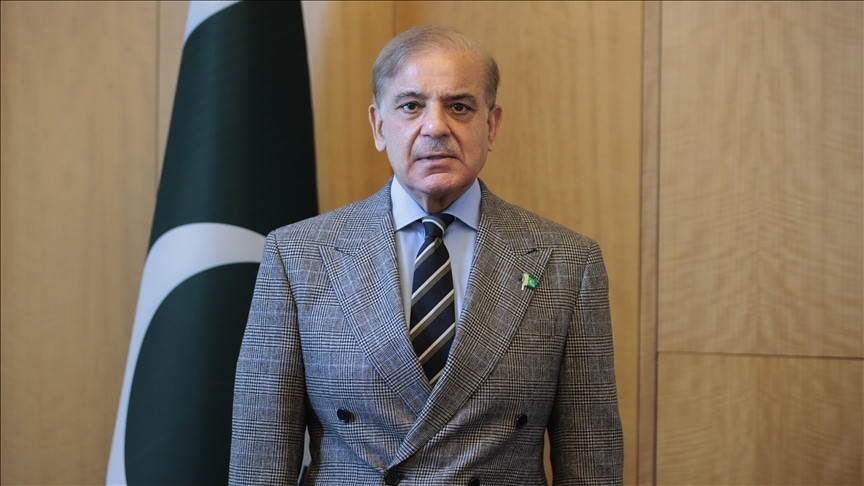
ISLAMABAD: Prime Minister PM Shehbaz Sharif has announced that Pakistan is launching the second phase of its major Economic Corridor project, with a renewed focus on enhancing regional transport and digital links.
Speaking at the closing of a regional transport ministers’ conference, the Prime Minister highlighted Pakistan’s strategic location and ports like Gwadar as key assets in global connectivity initiatives like the Belt and Road.
He stated that the country is actively investing in digital infrastructure and advancing several major railway projects to boost trade. These include the Trans-Afghan Railway and the Islamabad-Tehran-Istanbul railway corridor.
The Prime Minister emphasized that this push to improve regional connections is expected to transform the nation’s economic and trade landscape.
Last month Federal Minister for Planning Ahsan Iqbal announced that Pakistan has formally launched Phase II of the China-Pakistan Economic Corridor (CPEC), which will establish a dedicated corridor to connect Balochistan’s mineral resources with Gwadar.
Speaking to the media in Beijing after chairing the 14th Joint Cooperation Committee (JCC) meeting, Iqbal said the formal start of CPEC Phase II marked a new era of cooperation. “Unlike Phase I, the second phase will emphasize business-to-business partnerships rather than government-to-government projects,” he said, adding that Pakistan would create a favorable environment for Chinese companies to invest.
The minister described Beijing’s investment conference as the starting point of a new journey. He reaffirmed that Pakistan’s “Uraan Pakistan” vision seeks to transform the country into a one-trillion-dollar economy by 2035. He said the “Five Es Framework” and the five CPEC corridors are interlinked, covering growth, employment, innovation, green energy, and infrastructure.
Iqbal explained that the Growth Corridor will boost exports and accelerate economic development, while the Employment Corridor will uplift underdeveloped regions. He said the Innovation Corridor will allow Pakistan to benefit from China’s technological expertise and create a Digital Silk Road, whereas the Green Energy Corridor will promote cooperation against climate change risks. The Infrastructure Corridor, he noted, will expand regional connectivity with Central Asia and Afghanistan through new transport networks.