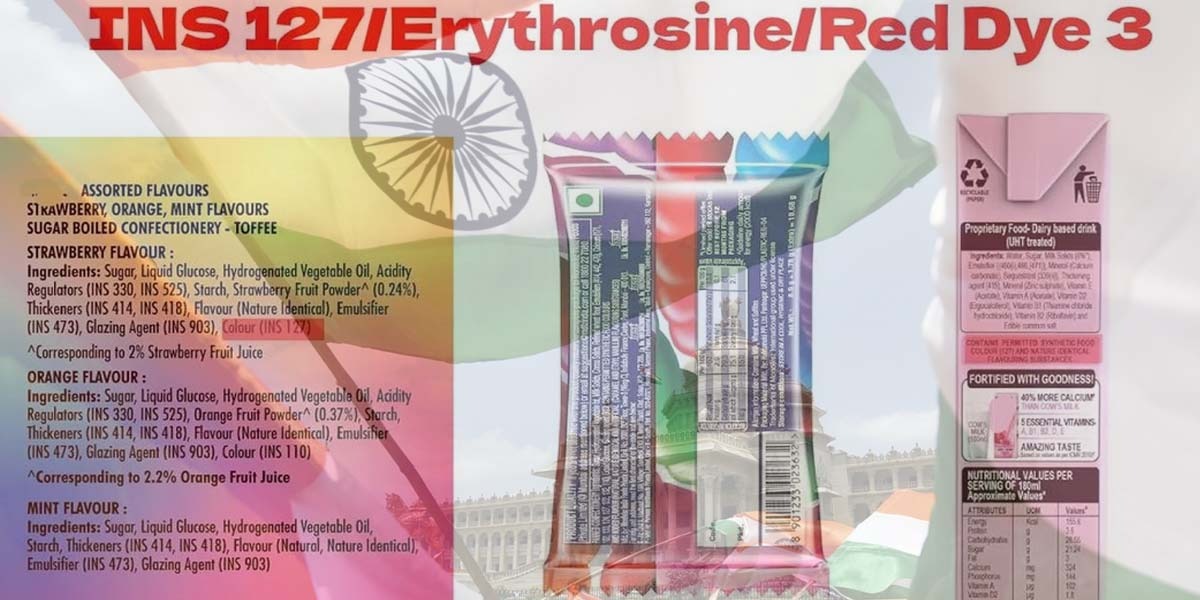
WASHINGTON: US Bans Cancer-Linked Food Dye INS 127 (Erythrosine) in Foods and Drugs, While India Continues to Permit It Amid Global Health Concerns
The US Food and Drug Administration (FDA) has banned the synthetic food colour additive FD&C Red No. 3, also known as Erythrosine or INS 127 (E127), in foods, dietary supplements, and ingested drugs.
This decision, announced on January 15, 2025, stems from studies showing it causes cancer in male laboratory rats through a rat-specific hormonal mechanism.
The ban is mandated under the Delaney Clause of the Federal Food, Drug, and Cosmetic Act, which prohibits any additive found to induce cancer in animals or humans, even if no direct evidence exists for human risk.
The FDA emphasized that the cancer-causing effect observed in rats does not occur in humans, and typical human exposure levels are much lower.
However, the law requires revocation of authorization. Manufacturers have until January 15, 2027, for food products and January 18, 2028, for ingested drugs to reformulate and phase out the additive.
It was previously banned in cosmetics and topical drugs since 1990.
In India, INS 127 remains permitted under the Food Safety and Standards (Food Products Standards and Food Additives) Regulations, 2011.
It is used to impart a bright red hue in products such as powdered soft drinks, fruit beverages, custard powder, jelly crystals, ice candies, thread sweets, candies, wafers, chewing gum, bubble gum, and flavour emulsions/pastes.
Erythrosine has raised health concerns, including potential links to hyperactivity in children (as noted in a 2021 California report) and thyroid issues in animal studies.
While it is still allowed in India, the US ban may prompt future regulatory reviews. Many manufacturers worldwide are shifting to natural alternatives due to growing consumer awareness.
Separately, India has faced international scrutiny over ethylene oxide contamination,a carcinogenic pesticide in exported food products.
Between September 2020 and April 2024, the European Union’s Rapid Alert System for Food and Feed (RASFF) flagged 527 Indian-linked items (primarily nuts, sesame seeds, herbs, spices, and dietetic foods) for ethylene oxide presence.
In 2024, Hong Kong and Singapore banned or recalled certain MDH and Everest spice mixes (e.g., MDH Madras Curry Powder, Sambhar Masala, Curry Powder; Everest Fish Curry Masala) after detecting the chemical above permissible limits.
The EU sets a strict 0.1 mg/kg limit, and detections continued despite advisories to exporters.
Indian companies have asserted product safety, but these incidents highlight ongoing quality challenges in exports.