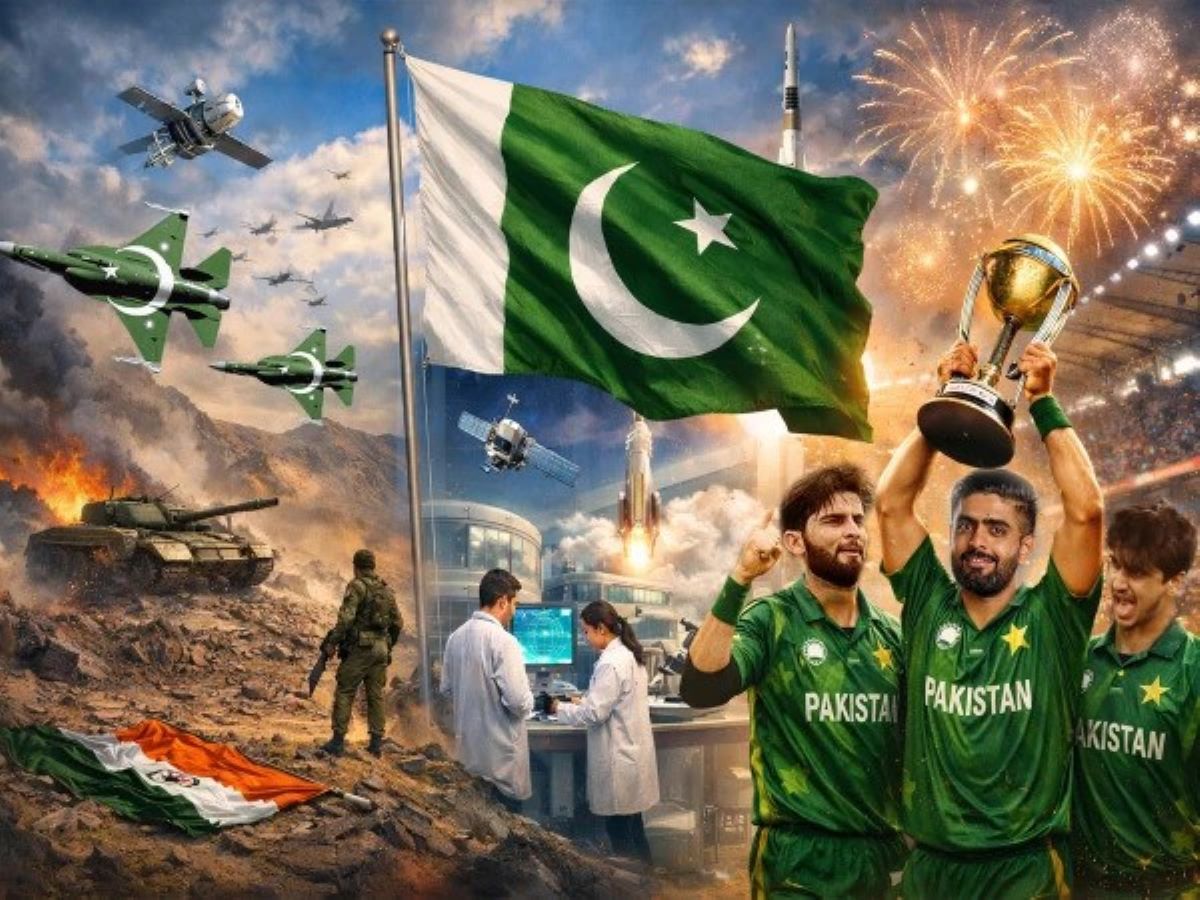
ISLAMABAD: The year 2025 has emerged as a defining achievement in Pakistan’s national history, indicated by important developments in defence preparedness, economic recovery, international diplomacy, sports, science and social development.
There are certain analysts describe the year as one in which Pakistan reshaped its global image through a combination of strategic stability, institutional reforms and international engagement.
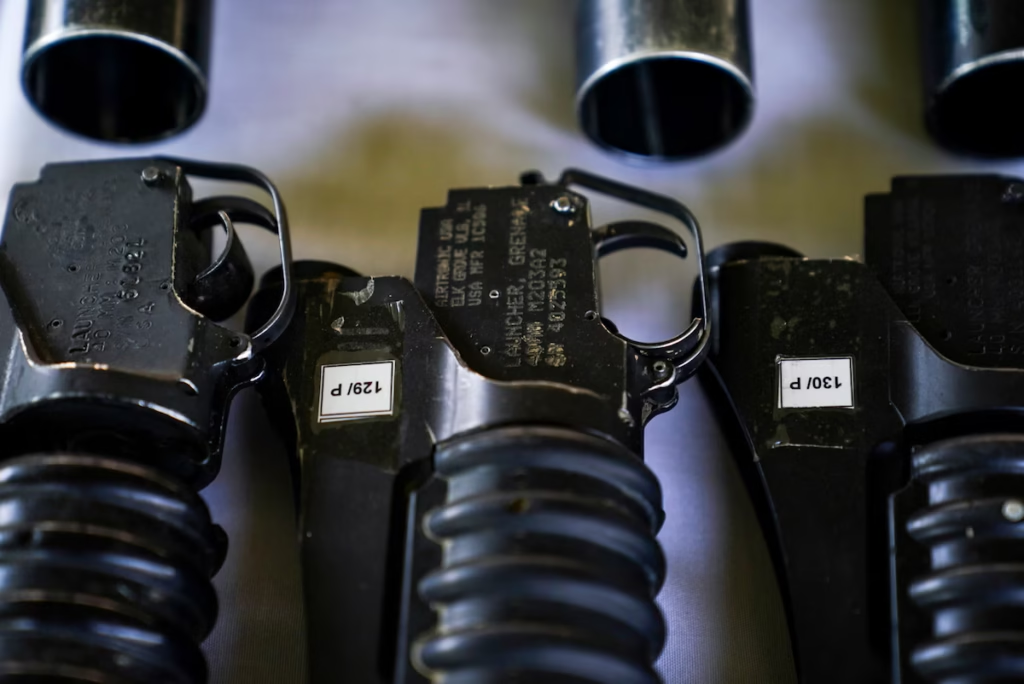
In this regard, events in May 2025 brought Pakistan’s defence capabilities into global focus. Following heightened regional tensions after an incident in Indian-administered Kashmir in April, both countries experienced a brief but intense military confrontation.
In this sense, Pakistan’s armed forces responded swiftly, leading to a ceasefire on May 10. International observers noted Pakistan’s effective air defence systems, operational readiness and emphasis on restraint, which contributed to regional de-escalation.
Subsequently, Army Chief General Syed Asim Munir was promoted to the rank of Field Marshal in recognition of his leadership, and later appointed Pakistan’s first Chief of Defence Forces, signalling reforms in joint military command.
Furthermore, 2025 saw renewed momentum in Pakistan–United States relations. High-level engagements, including meetings between Field Marshal Munir and US President Donald Trump, reflected growing strategic dialogue. American officials publicly acknowledged Pakistan’s role in regional stability and counterterrorism cooperation.
So far, the international media described this phase as a turning point in bilateral relations, with Pakistan increasingly viewed as a constructive regional partner.
Economically, Pakistan recorded notable improvements after years of fiscal stress. Inflation fell sharply to around 2 percent, GDP growth reached approximately 6 percent, and foreign investment increased by an estimated 30 percent.
The State Bank reduced interest rates to stimulate private-sector activity, while foreign exchange reserves rose to $14.5 billion.
The Special Investment Facilitation Council (SIFC) played a key role in streamlining investment processes, supporting projects in agriculture, minerals, IT and infrastructure. International institutions, including the World Bank, approved substantial financial support, reflecting renewed confidence in Pakistan’s economic direction.
Pakistan also made visible progress in global forums. During its presidency of the UN Security Council in July, Islamabad successfully sponsored a resolution promoting the peaceful resolution of conflicts. The General Assembly again adopted Pakistan-backed resolutions on self-determination, while the country remained active within the Shanghai Cooperation Organisation.
Meanwhile, in sports and science, Pakistan strengthened its soft power. The successful hosting of the ICC Champions Trophy enhanced its reputation as a safe venue for international events.
Athlete Arshad Nadeem won major international gold medals in javelin, while young talent showed promise in squash, hockey and cricket. In science, Pakistan launched its first domestically developed Earth observation satellite and received international recognition for climate and supercomputing research.
Overall, 2025 mentioned Pakistan’s efforts to pursue stability, reform and international cooperation, setting a foundation for continued engagement and development in the years ahead.