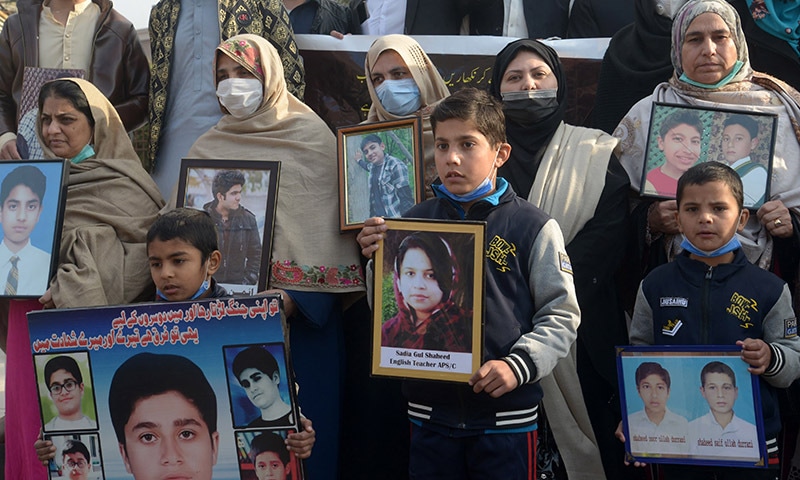
PESHAWAR: Pakistan is observing on Tuesday the 11th anniversary of the Army Public School (APS) massacre, the 2014 militant attack that martyred 147 people, mostly children, and left a lasting scar on the nation’s collective memory.
On December 16, 2014, gunmen stormed the Army Public School in Peshawar and killed 132 students, as well as teachers and staff. More than 150 others were wounded in one of the deadliest attacks in the country’s history.
Among the victims was principal Tahira Qazi and several teachers who tried to shield students from the attackers.
A martyrs’ memorial now stands inside the school. Each year, families gather there to pay tribute. A formal salute is also offered in memory of the dead.
On Tuesday, the 11th anniversary of the attack will be marked with ceremonies at APS. Families nationwide will hold Quran recitations and special prayers at home.
Grief continues to surface as the anniversary approaches. A message by Altaf Hussain, father of a martyred student, has circulated widely on social media. He recalled that his daughter left home happily on her first day of school and never returned.
“She went to school with books in her hands and came back wrapped in a shroud,” he wrote. He urged Pakistanis to choose unity and humanity over hatred.
Another victim was Muhammad Ali, a ninth-grade student and his parents’ only son. He was critically wounded in the attack and died later that day. The government posthumously awarded him the Sitara-e-Jurat.
His father said the pain deepens each December despite pride in his son’s sacrifice. His mother said her soul left with her son and prayed Pakistan never faces such a tragedy again.
The attack shocked the nation and drew global attention. International media called it Pakistan’s “9/11.”
Pakistan Army Special Services Group commandos launched a rescue operation, killed all six attackers and evacuated about 960 people from the campus.
Public outrage reshaped national policy. The government introduced the National Action Plan to counter militancy. Authorities lifted the moratorium on the death penalty, authorised military courts and intensified counterterrorism operations.
Also Read: Gwadar plans solar power for all schools
Four militants linked to the attack were executed in December 2015. Two attackers died during the siege. The mastermind, Omar Khorasani, was killed in Afghanistan in August 2022. The Supreme Court later upheld death sentences for two other convicts.
More than a decade on, time has not eased the loss. Families say the victims will not be forgotten and their sacrifice will not fade into history.